
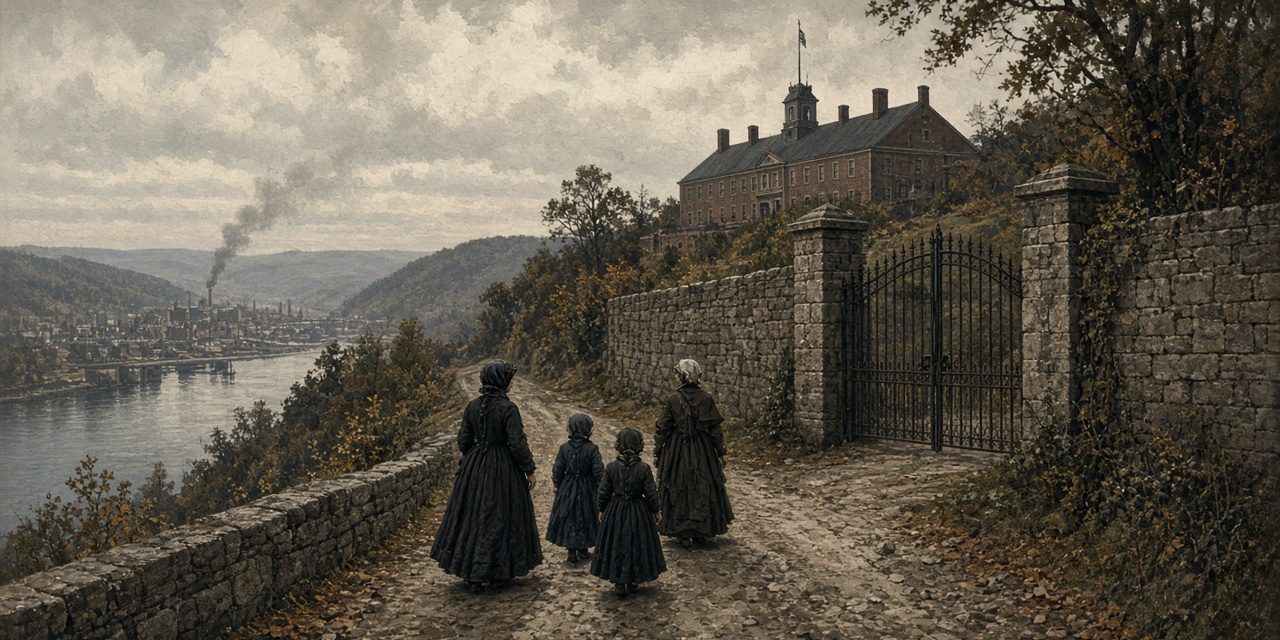
It was payday at the Allegheny Arsenal in Lawrenceville, Wednesday, September 17, 1862. A little before 2 p.m., a wagoner named Joseph Frick finished unloading barrels of gunpowder at the porch of the arsenal’s laboratory. A 19-year-old worker named Robert Smith called out and asked him to haul away some empty boxes. According to testimony quoted by the American Battlefield Trust, Frick then “saw on the ground, in the space between his wagon and the porch, some four feet, a flame of fire as from powder mixed with dirt; it made a fizzing noise.” The Allegheny Arsenal explosion that followed killed 78 people, according to the American Battlefield Trust, most of them young women and girls. Robert Smith was one of them. It happened on the same day as the Battle of Antietam, and for that reason, among others, it has been largely forgotten.
Who worked at the Allegheny Arsenal?
The arsenal was built in 1814 on about 38 acres in Lawrenceville, and the National Archives says it was originally designed by Benjamin Latrobe. By 1862 it was a major employer. The National Archives’ “Pieces of History” post on the disaster says that census and payroll records show the daughters, sisters, and wives of immigrant families doing dangerous munitions work for “desperately needed income,” and that the workers were overwhelmingly of Irish-Catholic heritage and lived in Lawrenceville. Many needed character references from a physician or a clergyman to be hired.
Girls ended up in the powder rooms partly because of a safety decision. Historian Judith Giesberg writes in HistoryNet that arsenal workers had repeatedly found matches in the powder rooms, twice packed in with cartridges awaiting shipment. In October 1861, Colonel John Symington, the commander, decided to “supply their places with females.” Giesberg adds that once women were doing the work, he reported no more discipline problems.
How many people were in the laboratory that afternoon is not settled. The American Battlefield Trust says 186, including 156 young women. A House committee report from 1882 says about 151 girls and 25 boys.
What happened on September 17, 1862?
The Reverend Richard Lea, whose Lawrenceville Presbyterian Church stood nearby, preached a sermon on the explosion about ten days later. It’s quoted in the National Archives post. “It was pay day, and the noble Union girls who had toiled all the month, were rejoicing over the reception of the fruits of their labor,” he said. “The shop had been swept, and among the leavings, some loose powder was scattered over the stony road winding around the beautiful grounds.”
The American Battlefield Trust article describes witness accounts. Rachel Dunlap said she saw a blaze under the front wheel of the wagon, heard the explosion, and was knocked down; she and her sister got out alive. Sisters Laura and Maria Guinn were leaving the building, and Maria was showing Laura her month’s pay. Laura said she never saw her sister again. She was found running down a nearby street with her dress on fire, and, according to the article, “for months lingered between life and death.” Giesberg’s account adds the testimony of Mary Jane Black, who pulled burning clothes off a girl on the grounds while another begged her for help.
The blasts were heard in Pittsburgh. With a major battle under way in Maryland, Giesberg writes, residents braced for what they thought was a Confederate attack. The Pittsburgh Daily Post called it “the most terrible calamity which has ever befallen our city” the next day, according to a 2021 paper by Ethan Wagner in the Gettysburg College Journal of the Civil War Era. The National Archives notes that the Pittsburgh Gazette put the story on page 3 and Antietam on page 1. The Gazette described bodies burning, and the steel bands of the girls’ hoop skirts marking where many had died. The same article reassured readers that the government would “experience but a very slight interruption to its business.” Early reports put the death toll at 39, Giesberg says. It took more than a year to settle on 78.
Many of the dead could not be identified, which is why a count was so hard to establish. In some cases a piece of jewelry or clothing was all a parent had. Alexander McBride, the civilian superintendent of the laboratory, was working in a back room when it happened. His daughter Kate, who worked there, was among the dead. Her age appears as 13 in the National Archives post and 15 in an Emerging Civil War article, and I can’t settle which is right.
What caused the Allegheny Arsenal explosion?
This is where I want to be careful, because several different stories are told as settled fact.
What the records support: a spark ignited loose powder on the road outside the laboratory porch. A House committee report (H. Rept. 1434, 1882) says the powder had been carelessly left on the floors and the road, and that a wagon “set the powder on fire by a spark struck from the flinty rock on the road.” It quotes Frick, who is spelled “Fricke” there, saying that in the spring of 1862 the officers had put 4-to-8-inch stones on the road. He told Lieutenant John Edie it was a strange road on which to haul thousands of pounds of powder. According to Frick, Edie told him to mind his business, and Frick answered that “we would all be blown up yet.”
What was disputed: who was to blame. A coroner’s jury heard nearly ten days of testimony and gave two verdicts on September 27. Four jurors blamed Colonel Symington, his lieutenants Edie and Jasper Myers, and the laboratory superintendent Alexander McBride and his assistant James Thorpe. Two, foreman John Riddell and James Hill, “utterly and entirely” dissented from blaming the officers and blamed the superintendents’ disregard of Symington’s orders. Symington then asked for his own military inquiry. The Gettysburg College paper says that court of inquiry convened October 15 and concluded that “the cause of the explosion could not be satisfactorily ascertained.” Symington was cleared. The paper also says he was relieved of command, reassigned briefly, retired, and died in 1864. The American Battlefield Trust says the superintendents stayed at their posts for the rest of the war.
What remains theory:
- Horse or wheel. Frick’s own statement in the House report says his off-side horse struck fire from the stones. Lea’s sermon says “either the iron of the wheel or a horse’s shoe struck fire,” and Rachel Dunlap said she saw the blaze under the front wheel. No source I found settles it.
- The powder barrels. According to the Gettysburg paper, McBride told the coroner that he had repeatedly complained to his superiors about DuPont supplying powder in leaky barrels with ill-fitting lids. The paper’s author argues that DuPont deserves the principal blame. That is one researcher’s argument, not a finding by any of the inquiries, and DuPont was not held responsible by either.
- Sabotage. The National Archives notes that rumors circulated that Symington had Confederate sympathies, and that his son joined the Confederate forces and his daughter married a Confederate general. Those family facts are documented. That the explosion was deliberate is not. The Gettysburg paper treats it as possible in principle but finds no evidence, and notes that the earliest documented evidence of organized Confederate sabotage it cites dates from 1863. I found nothing that supports it.
The evidence is thin partly because the evidence is gone. The National Archives says “very few records of the disaster survived,” and the Gettysburg paper says the coroner’s original transcripts were destroyed in a county courthouse fire in 1882, leaving the Daily Post‘s coverage as the main account of his hearings. I haven’t seen the military court’s transcript, which is at the National Archives in Philadelphia.
Who were the victims of the Allegheny Arsenal explosion?
The names matter more than the theories, and they are not easy to get right. The 1882 House report prints a list of 74 dead, which is the number it gives for the toll, and it divides them into those who could be recognized and those “burned beyond recognition.” The memorial in Allegheny Cemetery, dedicated in 1928, lists 78. The two lists don’t match exactly, and spellings differ from one to the other. The report has “Catherine Burkhardt” and “Mary and Ellen Slatterly,” and the memorial has Catherine Burkhart and Ellen and Mary Slattery. Maria Guinn, whom Laura Guinn described losing, is not in either list under that spelling, as far as I can tell.
A few things can be said with some confidence. Both lists include Kate McBride, the superintendent’s daughter. Both include a few men and boys, Robert Smith among them. The memorial marks some entries as relatives: Joseph and Mary A. Bollman as father and daughter, and Eleanor and Sarah Shepard as mother and daughter. The report itself says that “in some cases two or three belonged to the same family” and that some of the victims were “not much more than ten years of age.” I’m not reproducing the whole roll here, because I can’t verify the spellings. The memorial’s list has been transcribed on the Historical Dilettante blog, and the memorial itself is the best place to read them.
Where are the victims of the Allegheny Arsenal buried?
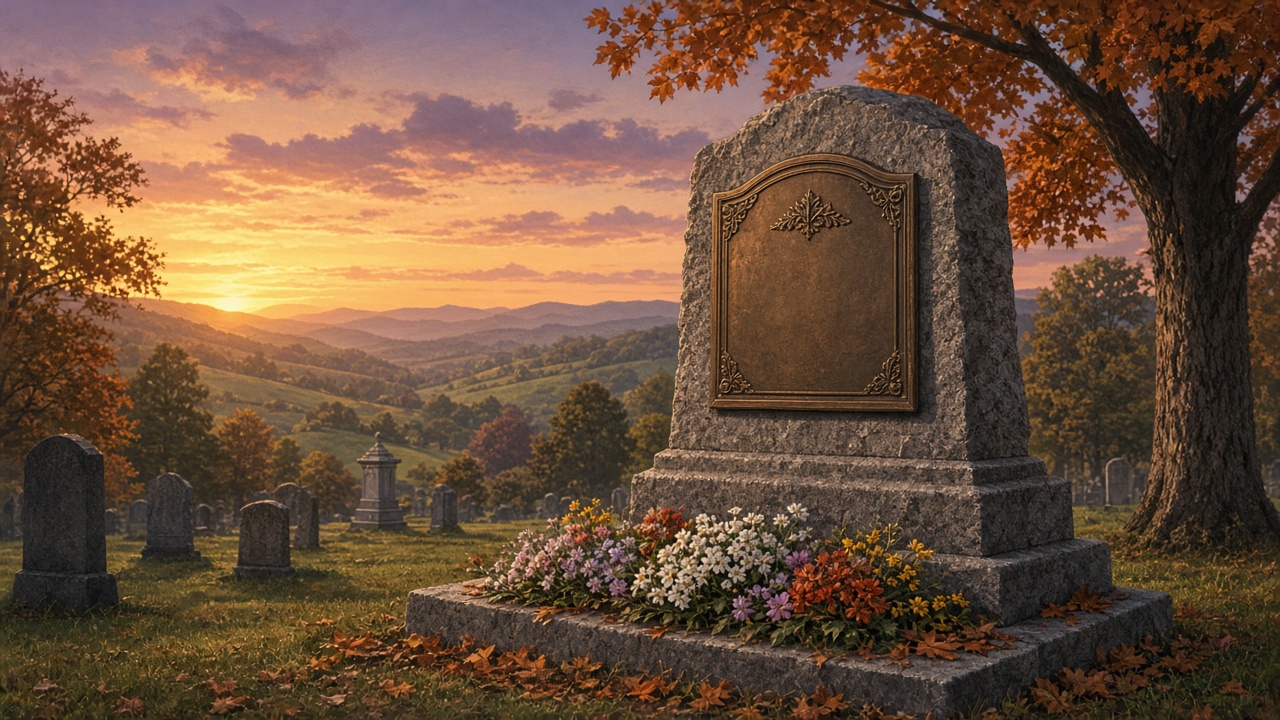
Within hours of the explosion, Allegheny Cemetery’s president, Thomas Howe, announced that a “suitable and appropriate lot” would be set aside for the victims, according to the American Battlefield Trust. On September 18, the unidentified remains went into a shared grave there, in government-furnished coffins, Emerging Civil War says. Others were buried in St. Mary’s Cemetery next door, and some elsewhere. (Our article on Allegheny Cemetery covers the cemetery’s own history.)
The number in the grave depends on who you ask. Emerging Civil War says 39 victims, the American Battlefield Trust about 40, and a ghost-tour site 43. The inscription itself says “forty-five.” Townspeople put up a monument on the first anniversary, in 1863. By 1928, the new monument’s inscription says, “time and its destructive elements obliterated the inscription and names on the original monument,” and the Sons of Union Veterans and its Ladies Auxiliary dedicated the present one on May 27, 1928. Its inscription begins “Tread softly this is consecrated dust” and says the monument was erected “to keep ever sacred the memory of all seventy eight.” It also says: “Identified by man known by Him who is the resurrection and the life, to be made known and loved again, when the morning cometh.”
Why was no one compensated?
The work did not stop. Symington asked to move the stored ammunition elsewhere, and Chief of Ordnance James Ripley answered on September 29 that there was nowhere to send it, adding that “the manufacture of ammunition should not exceed your ability to store it in safe and suitable buildings.” The arsenal kept making cartridges for the rest of the war.
The families waited twenty years. In 1882 the House Committee on Military Affairs reported a bill to provide relief, and said the officers in command “had been notified of the imminence of the danger,” so there was no contributory negligence on the workers’ part and “the women and children were wholly free from responsibility.” The National Archives says the bill asked for $25,000. In debate, Georgia Congressman Nathaniel Hammond asked whether the government had to make a donation every time someone was hurt in its employ. Congressman Thomas Bayne of Allegheny City (see our article on the rise and fall of Allegheny City) answered: “Through no fault of theirs they became the victims of this great destruction of life.” The bill died.
In 1890, according to Emerging Civil War, about 150 survivors and relatives gathered and sent another petition to Congress. Alexander McBride spoke. “I suffered with you all. I lost a beloved daughter,” he told them. “But I had more to bear than any of you… I was made to bear the brunt for a guilty one.” He said he’d been told to leave the city and had been threatened with tar and feathers. Nothing came of that petition either.
What remains of the Allegheny Arsenal today?
Less than you might expect. The site is now Arsenal Park, Arsenal Middle School, a county health building, and a mixed-use development. A 2025 City of Pittsburgh historic nomination counts 23 above-ground elements still standing: 19 segments of the original stone wall, an 1866 officers’ quarters, the powder magazine from about 1814, and two magazine buildings from the 1860s. The Lawrenceville Historic District, which includes the arsenal site and Allegheny Cemetery, was added to the National Register of Historic Places in 2019 (NPS record).
The powder magazine in Arsenal Park, a half-buried stone vault, is now a park maintenance building. A plaque on it, recorded by the Historical Marker Database, reads: “This tablet commemorates at least 79 civilian workers – men, women and many children – killed in three mysterious explosions, September 17, 1862.” Notice that the plaque says 79 and the memorial says 78. That sums up the difficulty with this story: nobody has ever been sure.
I also looked for ghost stories, since this is spooky season. A paranormal-tour site that covers the disaster says plainly that no ghosts have been reported at the site, and I found no earlier legend. What I found instead is a paper trail of names, two coroner’s verdicts, a congressional report, and a plaque on a shed in a park. In 2012, at an event at the Heinz History Center, audience members were handed index cards with a victim’s name and asked to stand and read it aloud. One of them, according to a blogger who attended, was given the name Susan McKenna, who is on the memorial.
Related reading on Steel City History: Haunted Allegheny Cemetery and The Rise and Fall of Allegheny City.