
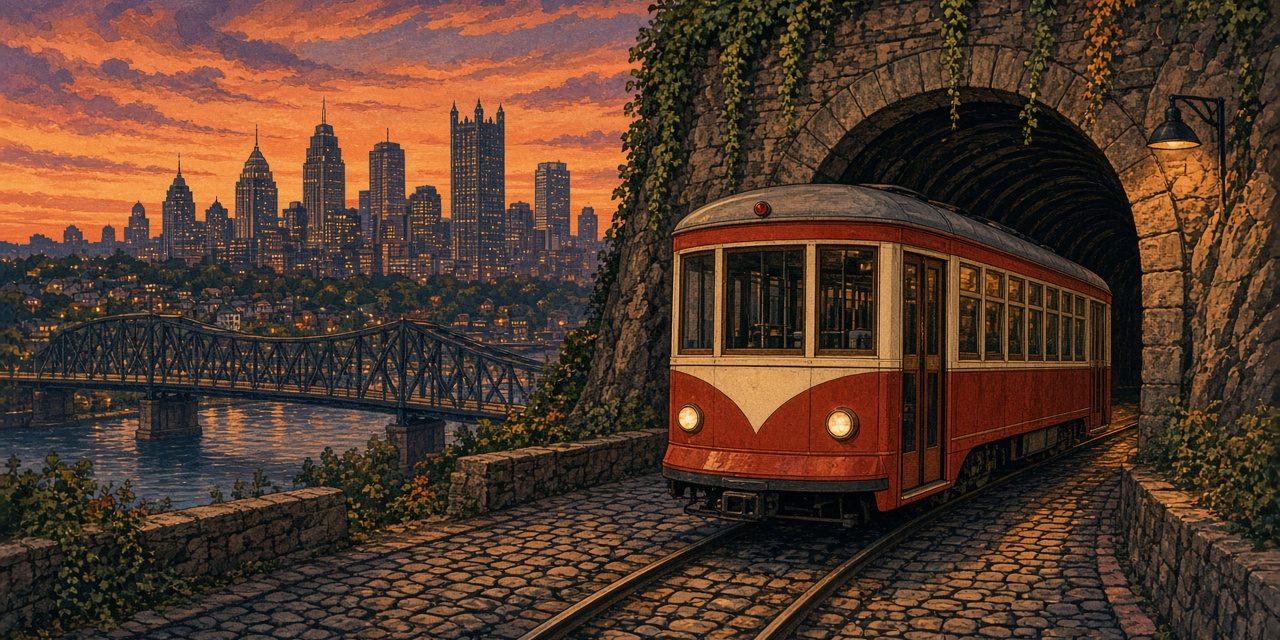
The last streetcars to run through the streets of downtown Pittsburgh did it with fireworks. It was Saturday, July 6, 1985, and Fred Mergner, who later became one of the Port Authority’s in-house historians, remembers hopping on the final trip around midnight. “They had fireworks on the track on Smithfield Street and we went over across the bridge and back to Station Square and everybody got out for a picture,” he told 90.5 WESA in 2018. That night ended a long story. Sixty-seven years earlier, Pittsburgh streetcars had been running on a network of 606 miles of track and 99 routes. This is the story of how that system came apart, and of the handful of lines the city held onto.
How big were Pittsburgh streetcars at their peak?
Bigger than almost anyone alive remembers. The Pittsburgh Railways Company was formed in 1902, and according to the finding aid for the Pittsburgh Railways Company Records at the University of Pittsburgh, it began as the operating manager of 193 street railway properties owned or controlled by the Philadelphia Company and three traction companies. The finding aid says its heyday came in 1918, when it carried more than 600,000 passengers a day over 606 miles of track and 99 routes. The Heinz History Center’s catalog entry for a 1922 Pittsburgh Railways fare token describes the system the same way, as “a large trolley system that encompassed over 600 miles of hilly terrain.” WESA reports that ridership itself peaked a little later, in 1920, when the city’s population was 588,343.
The same Pitt finding aid says something less flattering. Because of its “peculiar conglomerate business structure,” the company “grappled with financial difficulty from its genesis.” Other histories add that it went bankrupt in 1918 and again in 1938. Pittsburgh built one of the biggest streetcar systems in the country on shaky financial footing.
Some of its lines didn’t look like city streetcar lines at all. Pittsburgh Railways ran two interurban routes into Washington County, one to Washington and one to Charleroi, which served mining and mill towns. South of the city they followed the old Pittsburgh & Castle Shannon Railroad, a 40-inch narrow-gauge steam line that the Library of Congress’s Historic American Engineering Record documentation says was purchased in 1871 by the Pittsburgh & Castle Shannon Railroad Company, and that Pittsburgh Railways began electrifying in 1909. When the company bought new streamlined PCC cars for those routes in the late 1940s, HawkinsRails, a transit-history site that draws on Tom Parkinson’s book on the system, says they got roof-mounted headlamps, air whistles, and opening rear windows “to enable the motorman to put the trolley back on the wire when on the many trestle bridges.” In 1948 they were fitted with a “trolleyphone,” which let the motorman talk to the dispatcher over the trolley wire. Both lines were cut back to Library and Drake in 1953, and the phones and emergency kits went with them.
The trolley lines also made places. Kennywood began as what WESA calls a “trolley park,” a picnic ground at the end of a line, so the story of Kennywood is partly a streetcar story too.
The worst day on the system
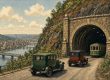
The Mount Washington Transit Tunnel is how the South Hills lines reached downtown, and it is also where the system had its worst day. The tunnel opened for trolleys in 1904, and the Bridges and Tunnels of Allegheny County site notes that the Carson Street end once hosted 12 trolley lines.
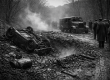
On Christmas Eve 1917, Knoxville car 4236 was packed with shoppers and workers heading downtown. Accounts of how many were aboard run from just over 100 to more than 120. In the tunnel, its trolley pole lost contact with the wire. The motorman of a following Charleroi car reset it, according to a review in Western Pennsylvania History, the Heinz History Center’s magazine, of the most detailed book on the subject, Mary Jane Kuffner Hirt’s The Mount Washington Transit Tunnel Disaster. When the lights and power came back, the review says, the motorman opened the controller to full speed. The car ran away down the 6 percent grade, jumped the tracks as it came out the north end, and slid on its side through the crowd at Carson and Smithfield. The Post-Gazette‘s history column puts the toll at 23 dead and 80 injured, and The Almanac says the same. Other sources give anywhere from 20 to 24, and I have not been able to settle the count myself.
One of the dead was Aurelia Kuffner Czerny, 45, a mother of seven from Beltzhoover. She was the author’s own relative, and her name was first on the list The Pittsburgh Post printed. A coroner’s jury found the motorman, Herman Klingler, “grossly careless,” and he served about 15 months for involuntary manslaughter. At least 70 civil suits followed, and Pittsburgh Railways paid out a little more than $288,000, according to The Almanac’s interview with the author. The company went into receivership in 1918. How much of that was the accident and how much was the company’s deeper money trouble is something I can’t pin down. Either way, the claims cost real money. A second runaway came out of the same tunnel on October 28, 1987, with dozens injured (reports range from 32 to 41) and no deaths, and the cause was brake failure.
What happened to Pittsburgh streetcars?
The short answer is that a lot of things happened at once.
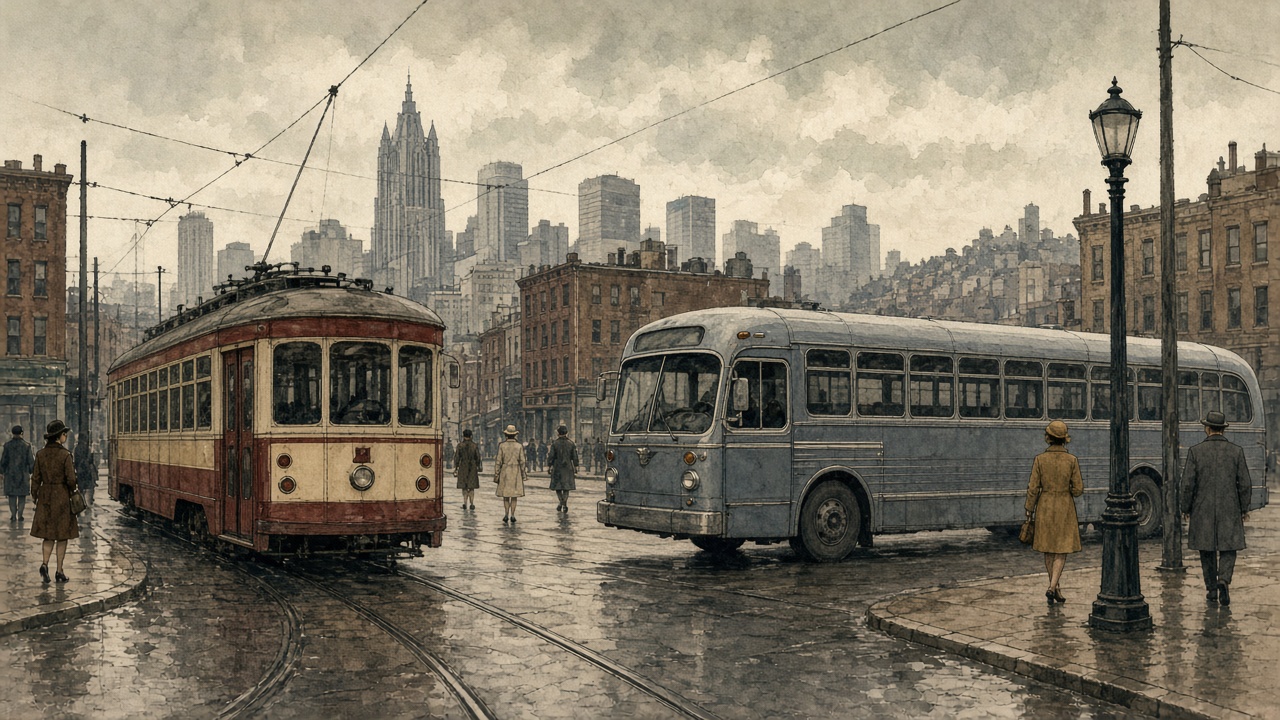
World War II was a reprieve. Gas and rubber were rationed, and, as Port Authority historian Chuck Rompala put it to WESA, “Everyone rode transit.” After the war, families moved to the suburbs and bought cars. By the early 1950s the region had 33 separate privately owned transit companies, with different fares and different unions, and some of them competed head to head. “Oftentimes there were competitions between some of the bus companies who literally would place buses in front of streetcars and take their passengers,” Rompala said.
Then the infrastructure started to give out. The old Point Bridge, which the HAER documentation says opened in 1927, was closed in 1959, the year the Fort Pitt Bridge opened (June 19), and it was not demolished until 1970. Route chronologies compiled by transit historians list the West End lines that crossed it as ending that June. In 1963, HAER says, trolleys were banned from the Brady Street Bridge because the floor was shifting and the track was moving out of position. AMCAP’s history of the Port Authority says the lines that used the 6th, 7th, and 9th Street bridges had to go for urban redevelopment. One summary of the era ties the late-1950s abandonments largely to highway and bridge construction, and many of the early losses were a bridge or a road job, not a decision to end the streetcar.
Then came the Port Authority of Allegheny County, which the state legislature created in 1956. It took over Pittsburgh Railways at 12:01 a.m. on March 1, 1964. By then only 283 of the 666 PCC cars were left. According to AMCAP’s history, the first bus under Port Authority ownership left the Homewood garage at 3:45 that morning and had its first accident at 3:57. The same history says plainly that the Port Authority wanted to be rid of the rail system, which it saw as old and in poor shape. Mergner told WESA that the planners’ analysis was that most of the cars would last until about 1972, and then it would start “falling into some serious disrepair.” Buses were cheaper than rebuilding it all. “It was done for economic reasons,” he said.
The pace was fast. The Pittsburgh Railways Online chronology lists routes ending on July 4, 1964, then September 4, 1965, then through 1966. Then, on Friday, January 27, 1967, ten East End routes (to Wilkinsburg, Braddock, Ardmore, Frankstown, Highland, Negley, Lincoln, and others) were converted to buses on the same day. AMCAP says the East End lines used weekend bus substitution to get riders used to the change. The buses kept the old trolley route numbers for well over a decade, until 1982. On January 28, a photo caption on a rail photographer’s site says, Wilkinsburg chartered PCC 1767 to give free rides on the 66 line the day after it closed.
The numbers are what stay with me. Parkinson, in his 1967 book The Street Railways of Pittsburgh, 1859–1967, quoted on HawkinsRails, counted 290 miles of track and 287 cars in 1965. By January 1967 it was down to 152 miles and 221 cars, and the closures scheduled for that month would leave 58 miles and 128 cars. Parkinson also wrote that the remaining routes were “superbly spectacular, leaping over rivers and ravines, plunging through woods, climbing over and tunnelling through hills to make Pittsburgh the mecca for American tramway enthusiasts.” He was describing a system in its last years.
The Port Authority also took over the inclines. The Duquesne Incline was saved when a society leased it from the Port Authority for $1 a year, while the Castle Shannon Incline, the one with a curve, closed on June 21, 1964, according to AMCAP. The story of the surviving inclines is a separate one.
Why Pittsburgh kept the South Hills lines
Most of the old network was track in the street, and as Columbia University’s transit map notes explain, those routes were easy to convert to buses. The lines that survived ran mostly on their own land, through the Mount Washington tunnel and over high viaducts. The Port Authority’s Mergner told WESA that planners eventually saw value in “all those exclusive rights of way running parallel to some very congested highway corridors.”
Even then, keeping them wasn’t the plan. AMCAP says that by 1970 the Port Authority had decided to retain part of the South Hills system, but that only the Library line was truly spared, because the Drake and Mt. Lebanon-Beechview lines would have been replaced over most of their routes by Skybus, an automated system built by Westinghouse. Skybus drew lawsuits from the mayor and the county commissioners. A 1975 agreement to hire an independent engineering firm led, as PublicSource tells it, to the busway and light rail system the region has today. The last all-street trolley routes were converted to buses in 1971. The tunnel itself was paved and ventilated in the 1970s so that buses and trolleys could share it, and two-way trolley service was restored through it on October 26, 1975, according to the tunnel’s entry on the Bridges and Tunnels site.
The word changed as well. “Light rail terminology came about because [no one] wanted to call them street cars anymore, it was old fashioned,” Rompala said. Construction on the modern South Hills system began in 1980. The subway and part of the route opened in July 1985, and the same month downtown trolleys stopped running on the Smithfield Street Bridge. Its tracks stayed until the 1994–95 rehabilitation. The PCC cars outlasted the street tracks: in September 1999, car 4004 made the last PCC run in revenue service, ending 63 years of PCCs in Pittsburgh. The Overbrook line had closed in 1993, because the HAER record says the cost of keeping its bridges safe was too high.
What’s left of the lost streetcar network
More than you’d think, and almost none of it where people look for it. The T still runs through the Mount Washington tunnel from 1904 and on lines whose roots go back to the Pittsburgh & Castle Shannon. The old network was built to what’s called Pennsylvania trolley gauge, 5 feet 2½ inches, which is wider than the 4 feet 8½ inches of standard railroad track. The Heinz History Center has interurban PCC 1724, which it acquired from the Port Authority, and the Pennsylvania Trolley Museum in Washington has 4004, the last one to carry passengers.
I also looked for ghost stories about the tunnel or the lines, since this is a spooky-season piece, and I did not find a documented one that I would repeat here. What I found instead was a paper trail: a coroner’s verdict, a list of the dead, a route list with a closing date next to every line. Aurelia Czerny was one of the people who died in the wreck at the north end of a tunnel that still carries trolleys today.
Related reading on Steel City History: Kennywood: Pittsburgh’s Working-Class Wonderland Turned Landmark, Pittsburgh Inclines History: Duquesne & Monongahela, and Bridges of Legacy.