
The Homestead Grays ended in the spring of 1951 without a farewell game. On May 22, Seward “See” Posey, who had inherited the club from his brother, closed the franchise, citing, in the words SABR’s biography of Cum Posey records, “financial setbacks and the egress of the best Negro talent into organized baseball.” That was the epitaph for a team that, by SABR’s account, won more Negro National League pennants than any other. It had begun half a century earlier as a recreation club for young steelworkers, and the way it ended owed something to how its owner had run it.
Teenagers from the mills
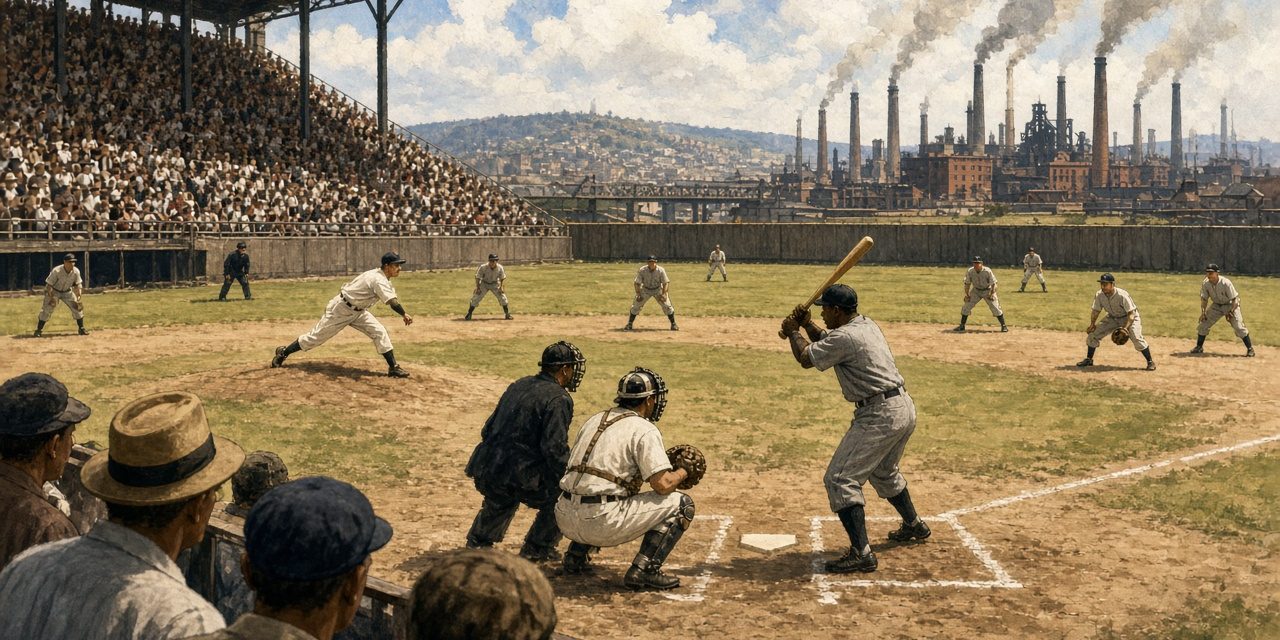
According to SABR, the Grays began around 1900 as the Germantown Blue Ribbons, a team of young Black men, mostly steel-mill workers, who played other amateur teams in and around the Homestead section of Pittsburgh. For a decade they were one more industrial-league nine in an area full of them. When their original managers quit in 1910, the players met at the home of John Freyl Alexander and renamed themselves the Murdock Grays. The Heinz History Center holds a photograph from 1910 or 1911 of a team labeled on the back as “the forerunner to the Homestead Grays.” In 1912 the club took the name that stayed, with Homestead stamped on it so that the borough would be plainly represented.
The roster that year included an outfielder better known for basketball. Cumberland “Cum” Posey Jr. had been born in Homestead in 1890. His father, Cumberland Sr., had been, according to SABR, the first African American licensed as a riverboat pilot and engineer on the Ohio River, and went on to a fleet of barges, coal companies and a seat among the original investors in the Pittsburgh Courier. The younger Posey played basketball at Penn State and Duquesne, where, SABR notes, he used an assumed name to protect his eligibility. He also organized and starred for the Loendi Big Five, which won Colored Basketball World’s Championships. The management habits he picked up there, booking opponents, promoting games and running the money, were what he brought to the Grays.
A team that stayed out of the leagues
Posey proposed running the Grays as a cooperative, with players and investors sharing expenses and profits. By 1920 he held operational control. In the early 1920s a professional club, the Pittsburgh Keystones led by Dizzy Dismukes, started paying players better than the Grays could, and Posey, backed by the local businessman Charley Walker, raised the payroll to match. As one Grays player later described the partnership, in SABR’s retelling, Walker was the money and Posey was the brains.
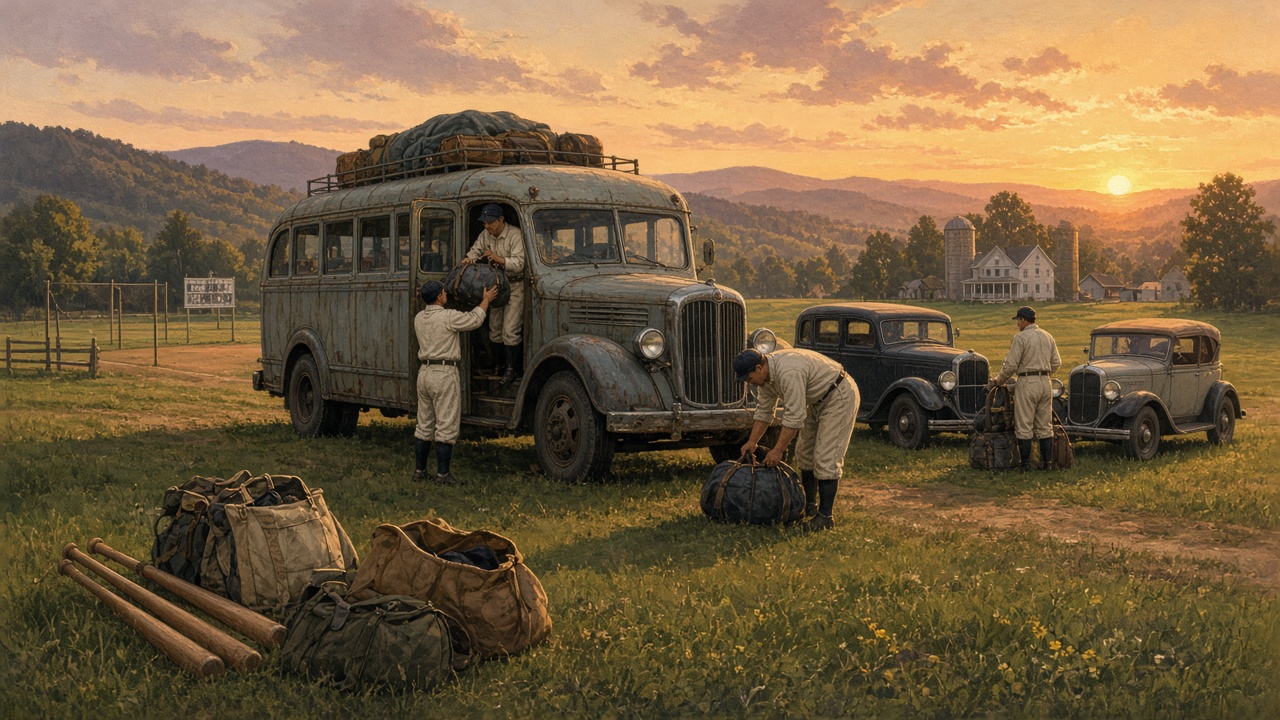
Higher salaries needed bigger crowds, so Posey arranged to use Forbes Field and filled the calendar with barnstorming. The geography helped. Pittsburgh was a train ride from the Eastern powers in New York, Baltimore and Philadelphia and from the Midwestern ones in Chicago and Kansas City. The Grays became such a reliable draw that, according to SABR’s essay, they could demand a rain guarantee, which paid them even if the game was washed out.
The surprising part is what Posey declined. Both Rube Foster’s Negro National League and the Eastern Colored League courted the Grays, and Posey said no for years. A league schedule would have cut into barnstorming, and league rules would have stopped him from signing players away from other clubs. When leagues told their members not to play the Grays, he booked top white semipro teams instead. Outside any league, he could sign whom he liked. That is how Smokey Joe Williams and other stars arrived in the mid-1920s. SABR’s biography of Posey puts the team’s 1926 record at 140 wins against 13 losses. A figure like that cannot be checked game by game, because the Grays played mostly independent schedules and, as SABR’s essay admits, complete information on the team’s early performance is hard to find.
1931, and a feud over Pittsburgh
The Grays tried a league in 1929, the short-lived American Negro League, and finished third. Then came two seasons outside any league, and in 1930 an 18-year-old catcher named Josh Gibson was in the lineup. How he first got there is one of baseball’s most-told stories, which SABR’s Grays essay calls “likely apocryphal”; the SteelCityHistory Josh Gibson article tells it. By 1931 the lineup held Gibson, Oscar Charleston and Jud Wilson, with Smokey Joe Williams and Willie Foster on the mound. Many writers call that club among the best teams ever assembled. The records show how loose the numbers are: one SABR biography gives the 1931 Grays a record of 163-23, while a SABR essay citing MLB.com gives 143-29-2, and both count games against local nines, semipro clubs and barnstormers along with league opponents. Posey used his Courier column to declare the Grays the “undisputed National Championship team” of Black baseball.
Then he overreached. In 1932 Posey founded the East-West League, which folded that summer. He kept the Pittsburgh Crawfords out of it. According to SABR, the only terms he offered the Crawfords’ owner, Gus Greenlee, were designed to be refused. Greenlee answered by raiding the Grays. Before that season ended, Gibson, Jud Wilson, Cool Papa Bell and Rev Cannady had jumped to the Crawfords, and Charleston and Ted Page had gone earlier. The Crawfords, whom this site has covered separately, became the strongest team in the new Negro National League of 1933. Posey’s Grays were allowed in only as associate members.
The Grays needed cash. In 1934 Posey took on a partner, Rufus “Sonnyman” Jackson, who had made his money in the Pittsburgh numbers business. Greenlee’s baseball empire stood on the same illegal lottery, so both halves of the city’s greatest baseball feud were financed by it. Jackson knew little about baseball, and Posey kept control of the team on the field.
Nine in a row?
The Grays’ famous run began in 1937. The Crawfords’ finances were failing and several of their stars had left for the Dominican Republic. Greenlee, unable to pay Gibson, traded him back to Homestead. With Gibson, first baseman Buck Leonard, pitcher Ray Brown and manager Vic Harris, the Grays won what is usually described as nine straight Negro National League pennants, 1937 through 1945. SABR’s biography of Posey says so. So does the 2000 state historical marker in Homestead, which also credits the team with “12 national titles.”
The nine are worth a second look. In 1939 the Grays finished first but lost the league’s championship series to the Baltimore Elite Giants, and SABR’s essay calls it “another pennant” anyway. Some tallies of the club’s league titles leave 1939 out. The Negro Leagues Baseball eMuseum says nine consecutive pennants but dates them 1939 to 1945, which spans only seven seasons. The Negro Leagues’ structure, with split seasons, playoffs and teams dropping out, makes the number depend on what is counted. The safest statement is that “nine straight” is the standard shorthand, and that it counts 1939 as a pennant because the Grays won the regular-season race.
The Grays also moved, in part, to Washington. Posey, noticing the city’s growing Black population during the war years, arranged for Griffith Stadium to serve as a second home, and the team spent much of its time there from about 1940. They played in five of the seven Negro World Series, winning in 1943 and 1944 against the Birmingham Black Barons.
The end
Cum Posey died of cancer on March 28, 1946, at 55. Josh Gibson died less than a year later. Jackie Robinson had signed with the Dodgers organization in late 1945 and reached Brooklyn in 1947. In SABR’s reading of the period, Posey’s own practice of raiding rosters and ignoring contracts left the Negro Leagues exposed when white owners did the same thing to Black clubs, signing their players with little or no payment to the clubs. Posey, SABR says, had pushed for more standardized contracts, and his anger afterward fell mostly on the players who left rather than the owners who signed them. That is an interpretation, not a documented fact, but it fits the way the franchise ended.
The Grays did win once more. In 1948 they beat the Baltimore Elite Giants for the pennant and then the Birmingham Black Barons, four games to one, in what proved to be the final Negro Leagues World Series. The youngest player in that series was Willie Mays, then with Birmingham. The Negro National League folded after that season. Jackson died in March 1949 and the team passed to See Posey. The Grays won the Negro American Association pennant in 1949, barnstormed in 1950, and shut down in May 1951. Even the end date varies: the state marker says they disbanded in 1950, and SABR gives May 22, 1951, so the marker most likely refers to the last season played.
What remains
The state historical marker stands in Homestead at the Homestead Grays Bridge, which was named in 2002 for the team, replacing the name Homestead High Level Bridge. In 2021 the county rededicated the bridge with a new plaque and banners honoring Grays and Crawfords players. Posey was elected to the Baseball Hall of Fame in 2006, and, SABR notes, to the Basketball Hall of Fame in 2016. The Heinz History Center’s online collection includes the 1910-11 photograph of the “forerunner of the Homestead Grays”: a row of ballplayers at Forbes Field, with a young Cum Posey in the front row.