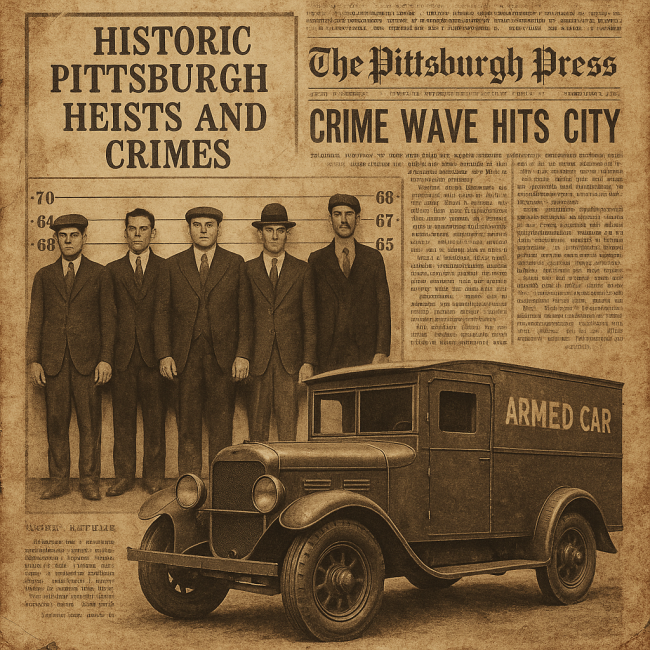
An aged newspaper collage featuring a 1920s police lineup and an armored truck, symbolizing Pittsburgh’s historic heists and crimes across eras.

Famous Heists and Crimes in Pittsburgh History

Introduction: A City of Steel and Shadowy Schemes Pittsburgh’s image has long been defined by its steel mills, smoky skies, and hardworking communities. Yet behind the forge and furnaces lurks a parallel history of audacious heists, gritty gangsters, and headline-grabbing crimes. From the mud-caked streets of the 1800s frontier town to the bustling industrial metropolis…

A vintage black-and-white photo of a quiet rural road in Western Pennsylvania at night, symbolizing the haunting legend of “Charlie No-Face” and his evening walks.

Charlie No-Face: Separating Pittsburgh Myth from the Man

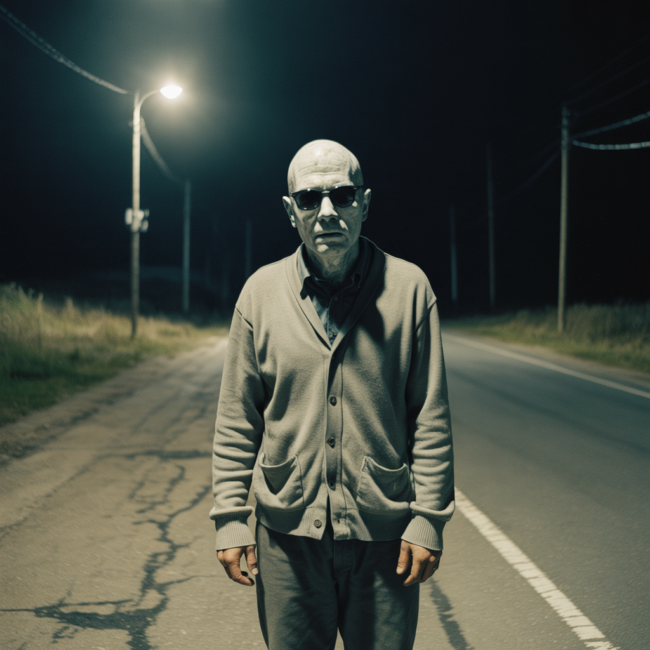
Koppel, Pennsylvania, and the surrounding Beaver County countryside. By day this quiet borough looks unassuming, but local folklore spins tales of a faceless “Green Man” wandering its roads at night .   The story of Pittsburgh’s “Green Man” or Charlie No-Face is woven into Western PA legend – a ghostly figure in an abandoned tunnel,…

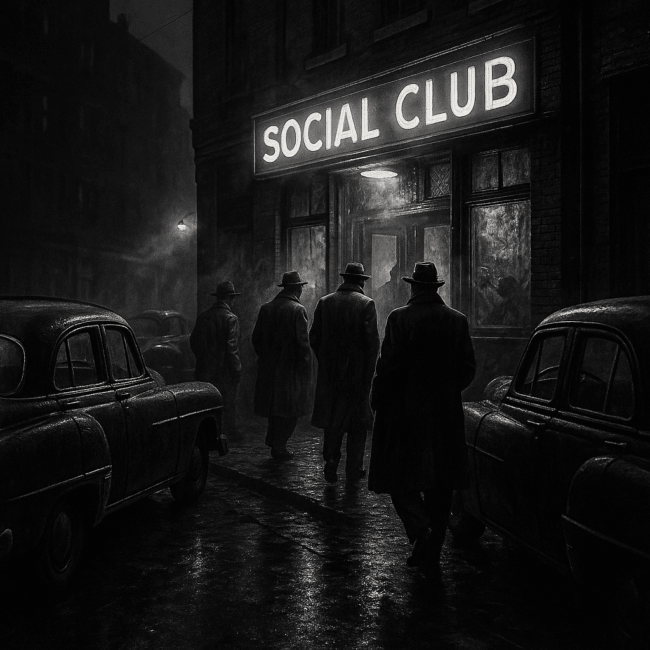
A gritty black-and-white photo-style image of 1950s Pittsburgh at night. Shadowy figures in trench coats and fedoras approach a smoky social club, with vintage cars lining the street. The industrial skyline looms behind them, evoking the secretive atmosphere of the LaRocca-era mob.

Mobsters of Pittsburgh: The LaRocca Era and the Rise of Organized Crime

Mobsters of Pittsburgh: The LaRocca Era and the Rise of Organized Crime In the smoke-filled back rooms of Pittsburgh’s working-class neighborhoods, amid the clinking glasses and whispered deals of its social clubs, a quiet but ruthless empire was born. Pittsburgh’s mafia history often sits in the shadow of more famous cities like New York and…

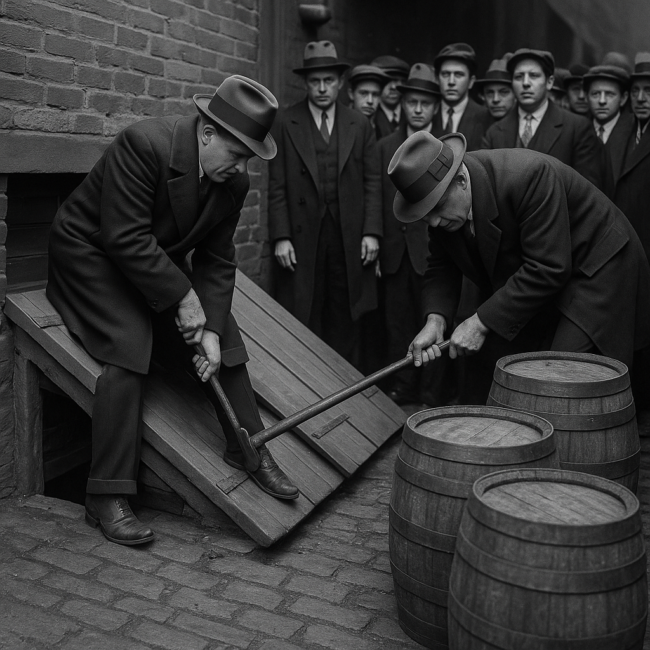
Black-and-white 1920s scene of Prohibition agents prying open a cellar door during a raid on an illegal Pittsburgh speakeasy, with barrels of liquor and onlookers visible.

Pittsburgh’s Role in Prohibition: Moonshine, Speakeasies, and Bootleggers

On a warm summer evening in 1919, throngs of Pittsburghers packed into saloons for what was billed as the “last call” before the dry law took effect . Strangely, the wild debauch many expected never materialized. “Everybody came to see everybody else get drunk,” the Pittsburgh Post observed the next day, “and nobody got drunk”…