
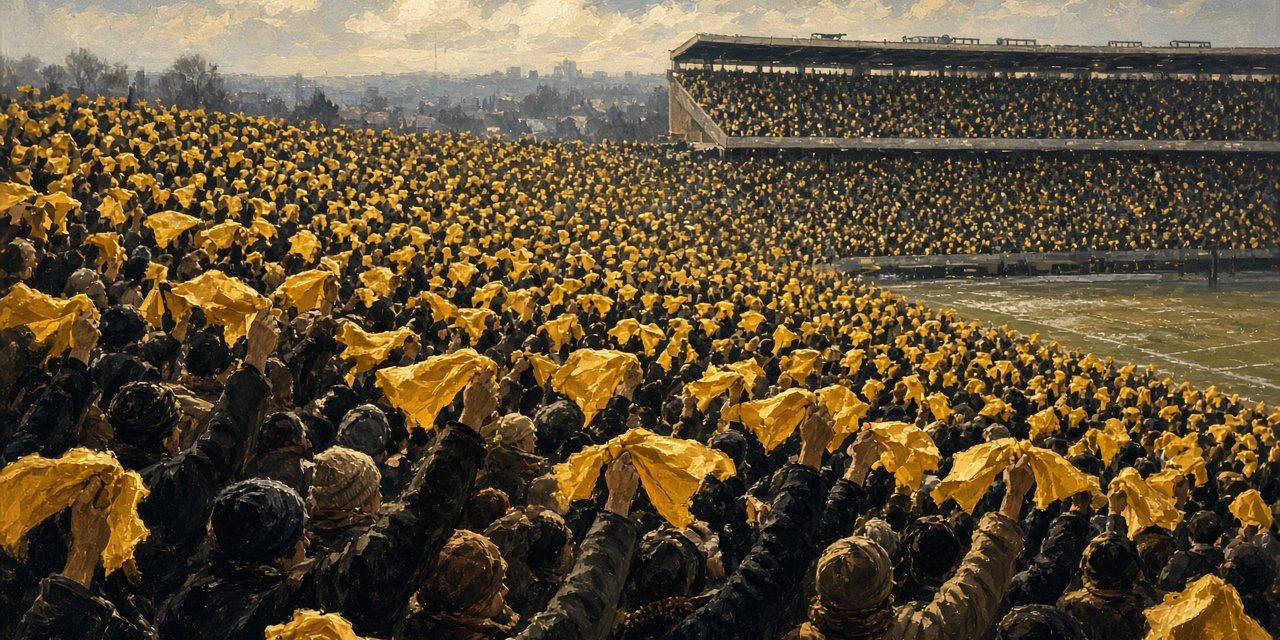
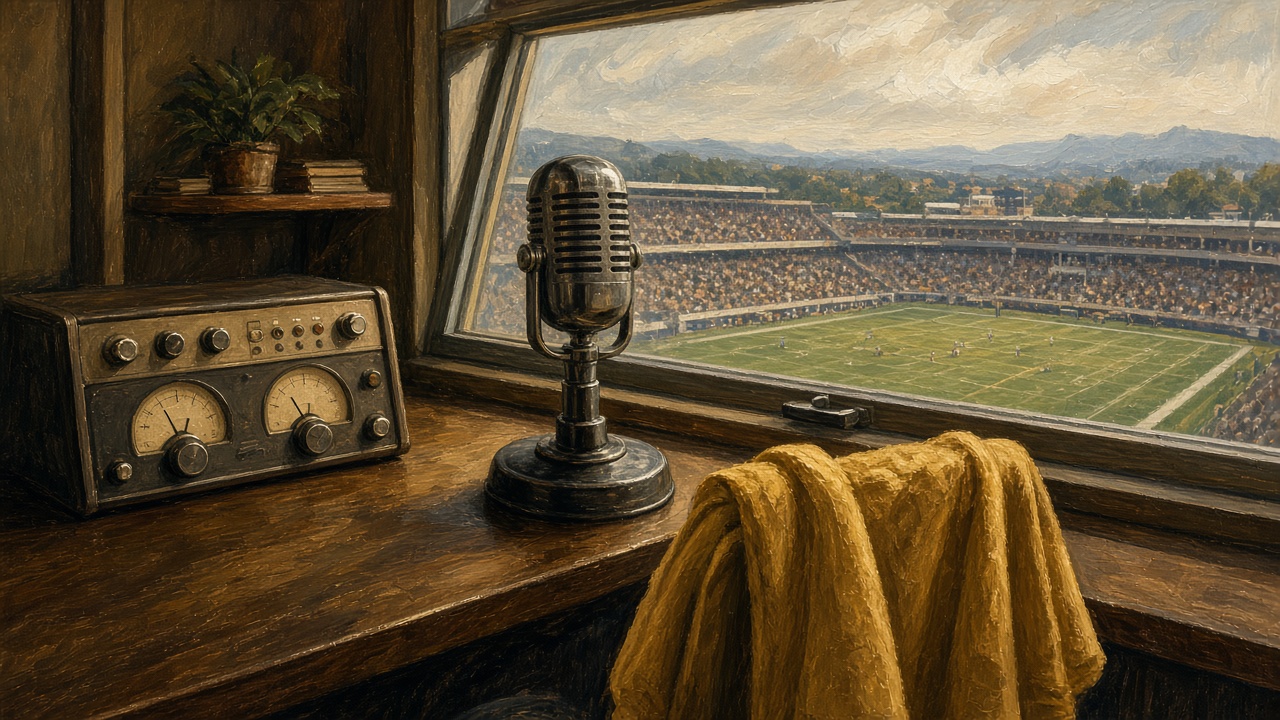
Terrible Towel history begins in December 1975, when Pittsburgh radio station WTAE wanted a gimmick for a Steelers playoff game and broadcaster Myron Cope told fans to bring gold or yellow towels to Three Rivers Stadium and wave them. On December 27, 1975, by Cope’s own estimate, about 30,000 towels were waving as the Steelers beat the Baltimore Colts 28-10. Half a century later the towel is one of the best-known fan objects in American sports, it has its own folklore about a “curse,” and its royalties have raised millions of dollars for a school for people with intellectual and developmental disabilities. Here is how it started, who doubted it, and why it lasted.
Who was Myron Cope?
Cope was born in Pittsburgh on January 23, 1929, and, according to the Steelers’ obituary, lived his entire life there except for seven months in 1951, when he took his first job out of college at the Erie Times. He was a writer first. He became a Special Contributor at Sports Illustrated, a title the team says he shared with George Plimpton. He got into broadcasting almost by accident in 1968, when WTAE radio invited him to deliver a daily sports commentary from home. In 1970 he became the radio color analyst for Steelers games, a job he held through the 2004 season.
He was also, by then, a Pittsburgh voice in the most literal sense. It was on Cope’s radio show, the Steelers say, that the words “Immaculate Reception” became the household name for Franco Harris’s 1972 playoff catch, a story told in the SteelCityHistory history of the Steelers’ 1970s dynasty. Earlier still, Cope covered the Pirates’ 1960 World Series win for the Pittsburgh Post-Gazette; his account of the final inning is one of the sources for the SteelCityHistory story of the Mazeroski home run.
How the Terrible Towel was invented
In December 1975 the Steelers were defending Super Bowl champions, and in two weeks they would host the Colts in the playoffs. WTAE, the team’s flagship radio station, wanted something that would energize fans and attract sponsors, according to a 2014 Sports Illustrated retrospective by Gary Gramling. Cope was called into a brainstorming session. In a 1979 essay for Sports Illustrated, quoted in that retrospective, he recalled the conversation:
“What we need here,” I said, “is something that’s lightweight and portable and already is owned by just about every fan.” “How about towels?” [Larry] Garrett said. “A towel?” It had possibilities. “We could call it the Terrible Towel,” I said. “Yes. And I can go on radio and television proclaiming, The Terrible Towel is poised to strike!” “Gold and black towels, the colors of the Steelers,” someone piped. “No,” I said. “Black won’t provide color. We’ll tell ’em to bring gold or yellow towels.”
SI identifies Garrett as the station’s vice president of sales. The Steelers’ own history says Cope “encouraged Steelers fans to bring a yellow dish towel” to the game and wave it to rally the team.
The players were not impressed
Not everyone liked the idea. SI quotes linebacker Andy Russell: “What’s this crap about a towel? We’re not a gimmick team.” Steelers president Dan Rooney’s verdict came later, according to the same piece: “Your idea was pure genius. But you were too stupid to know what you were doing.”
Was it an original idea?
Not entirely. Sporting News writer Mike DeCourcy pointed out in 2016 that Miami Dolphins fans had waved white handkerchiefs during the team’s perfect 1972 season. What made the Pittsburgh version different was the name, the color and the fact that the fans adopted it so quickly.
December 27, 1975: the first towel game
The game was played at Three Rivers Stadium in light snow, at about 30 degrees, before a crowd of 49,053, according to the box score kept by Pro Football Archives. Cope estimated that 30,000 towels were in the stands.
The game itself was closer than the final score. Franco Harris scored first on an 8-yard run, but the Colts led 10-7 in the third quarter on a Marty Domres touchdown pass and a Toni Linhart field goal. The Steelers then scored three straight touchdowns: a Rocky Bleier run, a Terry Bradshaw run, and, to close it out, a 93-yard fumble return by Andy Russell, the same linebacker who had dismissed the towel as a gimmick. Pittsburgh won 28-10. Harris ran for 153 yards.
DeCourcy writes that the towel became firmly established when Lynn Swann ran out of the tunnel waving one before the AFC Championship Game against the Oakland Raiders. The Steelers went on to win their second straight Super Bowl, as SI notes, and the towel was part of the team’s story from then on.
The towel in the dynasty years
The towel arrived just as the Steelers were becoming the team of the decade, which helps explain why it lasted. The SteelCityHistory history of the dynasty calls it a rally symbol that “channeled something real: the pride of a city that was struggling economically.” A Sports Illustrated photo caption shows Swann and John Stallworth holding Terrible Towels after the Steelers beat Houston to reach Super Bowl XIII.
Cope kept calling those games for WTAE until 1999, when the Steelers moved their radio broadcasts to a new flagship station, WDVE-FM, and he moved with them, according to the team’s obituary. His standing in the sport also grew. In 1983 the Pro Football Hall of Fame appointed him to its Board of Selectors, the group that elects players to the Hall. The team says that at the time, none of the thirty-some journalists on the board was a broadcaster. He served on it for 10 years.
The “curse” of the Terrible Towel
The towel also gathered a folklore of its own: opponents who disrespect it, the story goes, pay for it. None of this is anything more than coincidence, but fans keep a list, and DeCourcy’s 2016 Sporting News column compiled the best-known entries:
- January 1995: Before a playoff game at Three Rivers, Cleveland Browns running back Earnest Byner stepped on a towel. The Steelers won 29-9. Ten months later the Browns announced they were leaving Cleveland.
- December 2005: After a touchdown in Cincinnati’s 38-31 win at Heinz Field, Bengals receiver T.J. Houshmandzadeh wiped his cleats with a towel. The Bengals, 9-3 at the time, lost their last two regular-season games and then lost to the Steelers at home in the wild-card round, 31-17.
- 2008: Baltimore’s Derrick Mason was seen stomping on a towel before a game at Heinz Field. The Ravens lost to Pittsburgh three times that season, the last in the AFC Championship Game. That December, Tennessee’s LenDale White led teammates in stomping on a towel after a blowout win over the Steelers. The Titans then lost their next two games, including their first playoff game.
- January 2009: At a rally before Super Bowl XLIII, Phoenix Mayor Phil Gordon appeared to blow his nose into a towel. The Steelers beat the Arizona Cardinals 27-23.
- December 2016: Bengals running back Jeremy Hill tried to rip a towel after a touchdown and threw it to the turf. The Bengals did not score another touchdown and lost 24-20.
Where the money goes: Allegheny Valley School
The part of the story Cope cared about most has nothing to do with football. His son Danny was born with severe autism and needed round-the-clock care, Sports Illustrated reported, and the family placed him at Allegheny Valley School, where he progressed further than Cope had thought possible. In 1996, Cope gave the school the trademark to the Terrible Towel.
Since then, the royalties from every officially licensed product, from towels to ties, ornaments, bibs and temporary tattoos, have gone to the school, which is now part of Merakey and is known as Merakey Allegheny Valley School. The school says it has received more than $10 million from licensed Terrible Towel products since 1996. (Sporting News put the figure at more than $3 million in 2016; the school’s figure is newer.) Founded in 1960 to care for 10 children from a closing orphanage, it now serves more than 650 people through 120 programs in nine Pennsylvania counties, according to its website. The school says the money pays for equipment, program development and renovations to its facilities. It became an affiliate of Merakey, formerly NHS Human Services, in 2008. Licensed products carry a tag naming the school as a beneficiary, and the school says a towel without that tag may be unlicensed.
Cope also served on the board of the Pittsburgh chapter of the Autism Society of America, the Steelers’ obituary notes, and on the committee of a golf tournament for autistic children that bore his name.
Myron Cope’s legacy
Cope cut back his broadcasting in 1995, ending a nightly WTAE talk show that had run almost 22 years, and announced his retirement from the Steelers booth on June 21, 2005. That year he became the first pro football broadcaster elected to the National Radio Hall of Fame and received the Pete Rozelle Radio and Television Award from the Pro Football Hall of Fame. He died on February 27, 2008, at 79. The Steelers added him to their Hall of Honor in 2022.
The team’s Hall of Honor biography quotes what Cope said he was proudest of on the day he retired: “To me, I’m most proud of my credibility. I have always guarded it. I want people to believe that if I say something, I know what I’m talking about, at least partially, and that is what I believe.”
“Myron’s legacy will continue to live on at every Steelers game in the form of The Terrible Towel,” Steelers President Art Rooney II said when Cope died. Cope grew up in Squirrel Hill, which counts him among its notable residents in the SteelCityHistory history of the neighborhood.
Common questions
Who invented the Terrible Towel?
Steelers broadcaster Myron Cope, during a WTAE brainstorming session in December 1975. The suggestion of towels came from station sales executive Larry Garrett, in Cope’s own telling; Cope named it and told fans to bring gold or yellow ones.
When was the Terrible Towel first used?
At the Steelers’ AFC Divisional playoff game against the Baltimore Colts at Three Rivers Stadium on December 27, 1975. The Steelers won 28-10.
Who gets the money from Terrible Towel sales?
Merakey Allegheny Valley School, which received the trademark from Cope in 1996 and receives the royalties from officially licensed products.
What is the Terrible Towel curse?
A fan legend that opponents who mistreat the towel suffer for it, built on a run of coincidences such as the Bengals’ 2005 playoff loss after T.J. Houshmandzadeh wiped his cleats with one.