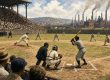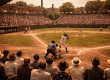

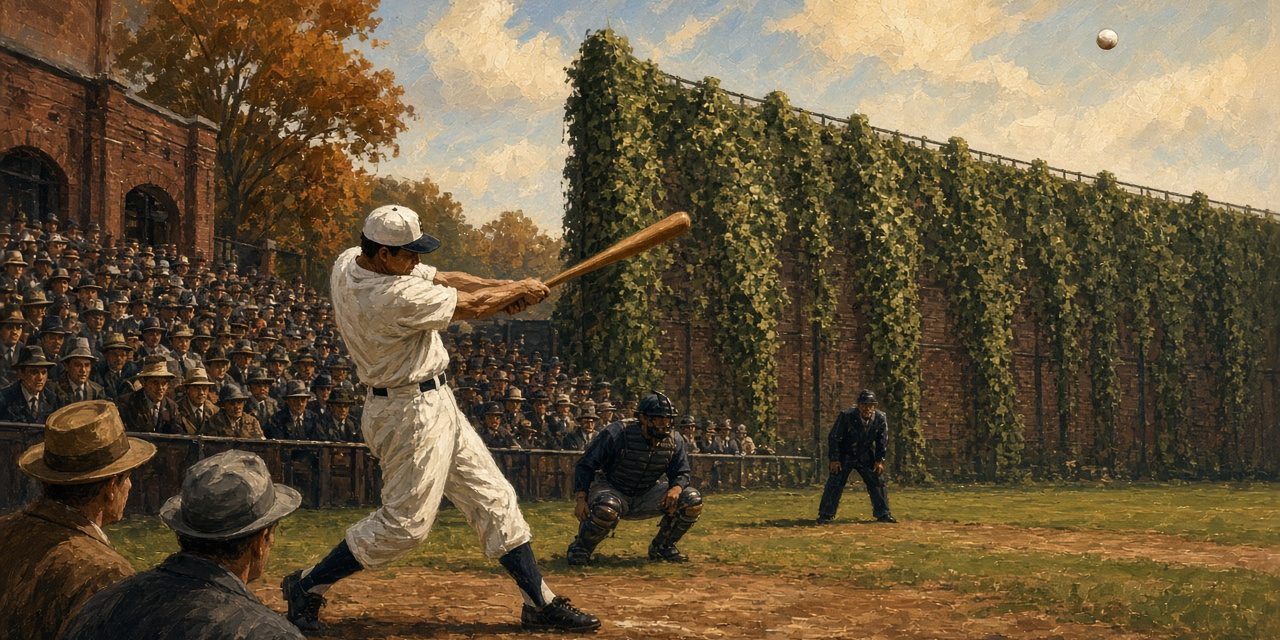
The Mazeroski home run ended the 1960 World Series at 3:36 p.m. on October 13, 1960, when Pittsburgh Pirates second baseman Bill Mazeroski led off the bottom of the ninth inning of Game 7 at Forbes Field and drove a pitch from the New York Yankees’ Ralph Terry over the left-field wall for a 10-9 win and the Pirates’ first championship in 35 years. It is still the only World Series to end on a walk-off home run in Game 7. Here is how the series got there, what happened in one of the strangest games ever played, what the sources disagree about, and where you can still stand in the spot where it happened.
A Pirates team nobody expected
The Pirates had not been in the World Series since 1927, when the “Murderers’ Row” Yankees swept them, and had not won one since 1925. The 1960 team finished the regular season 95-59, managed by Danny Murtaugh, with a roster that included Roberto Clemente, the double-play pair of Mazeroski and shortstop Dick Groat, and pitchers Vern Law and Roy Face, according to a 2018 Society for American Baseball Research (SABR) article by Rich Puerzer. The Yankees, managed by Casey Stengel, went 97-57 and were making their 10th World Series appearance in 12 years, with Mickey Mantle, Yogi Berra, Whitey Ford, Roger Maris and Elston Howard.
The Pirates had a habit of coming back. SABR’s biography of Mazeroski by Bob Hurte counts 28 Pirates victories that season in games they were losing or tied after the sixth inning, the record that earned them the nickname “Battlin’ Bucs.” The SteelCityHistory profile of Roberto Clemente describes 1960 as the year he came of age as a player.
The strangest World Series
The first six games made no sense on paper. The Pirates won Game 1, 6-4, then lost Games 2 and 3 by scores of 16-3 and 10-0. They won Games 4 and 5, 3-2 and 5-2. Back at Forbes Field, the Yankees won Game 6, 12-0. Going into Game 7, Puerzer notes, New York had outscored Pittsburgh 46-17. The Yankees’ three wins came by a combined 38-3, two of them shutouts. The Pirates’ three wins came by a total of six runs.
Game 7, inning by inning
The most detailed account read for this article is SABR’s Games Project piece by Mike Huber, which draws on the next day’s Pittsburgh Post-Gazette and Pittsburgh Press.
The Pirates jump ahead
Rocky Nelson hit a two-run homer off Yankees starter Bob Turley in the first inning. In the second, Smoky Burgess singled, Stengel replaced Turley with Bill Stafford, Don Hoak walked, and Mazeroski bunted for a single to load the bases. Bill Virdon’s single drove in two more, and Pittsburgh led 4-0.
The Yankees take over
Bill “Moose” Skowron homered for New York in the fifth. In the sixth, after a single and a walk, Murtaugh pulled Law for Face. Mantle singled in a run, and Berra hit a three-run homer into the upper deck in right field. The Yankees led 5-4. In the eighth they added two more runs on a Johnny Blanchard single and a Clete Boyer double to make it 7-4.
The bad-hop inning
The bottom of the eighth turned the game over again. Pinch-hitter Gino Cimoli singled. Virdon then hit a sharp grounder to shortstop that should have been a double play, but it took a bad hop and struck Tony Kubek in the throat, knocking him out of the game. Groat singled in a run, and Stengel replaced Bobby Shantz with Jim Coates. After a sacrifice and a fly out, Clemente beat out a slow roller when Coates was late covering first, scoring Virdon to make it 7-6. Then Hal Smith, who had come in as a defensive replacement at catcher, hit a three-run homer to left. Pittsburgh led 9-7. Puerzer calls it “a now-underappreciated three-run homer.”
The tie
Bob Friend came in to close it out and gave up singles to the first two batters he faced, Bobby Richardson and pinch-hitter Dale Long. Harvey Haddix replaced him. Maris fouled out, but Mantle singled in Richardson, and Long reached third. Then Berra grounded sharply to Nelson at first. Nelson stepped on the bag for the out, and Mantle dove back into first base, evading Nelson’s tag with what the Post-Gazette called “a beautiful headlong slide,” while pinch-runner Gil McDougald scored the tying run. It was 9-9 going into the bottom of the ninth.
The Mazeroski home run
Mazeroski, batting eighth, led off. Hurte’s biography says Mazeroski had forgotten he was leading off until coach Lenny Levy reminded him to get a bat, and that catcher Johnny Blanchard reminded Terry to keep the ball down, because Mazeroski was known as a high-ball hitter. Terry’s first pitch was high for ball one. On the second pitch, Mazeroski hit a drive to left-center. Berra and Mantle could only watch it clear the wall.
Chuck Thompson called it on NBC radio, as quoted by SABR: “Here’s a swing and high fly ball going deep to left. … It may do it! Back to the wall goes Berra; it is over the fence! Home run! The Pirates win!”
The Post-Gazette’s account the next day, as quoted by Huber, said Mazeroski “went sailing around the bases waving his hat in one hand and pandemonium broke loose among the 36,683 patrons.” Fans ran onto the field as he rounded the bases and met him at home plate.
Afterward Mazeroski told reporters, “I thought it would go over. … I was hoping it would. But I was too happy to think. All year we’ve been a fighting, come-from-behind ballclub. We always felt we could pull it out – even after the Yankees tied it in the ninth – but I didn’t think I’d be the guy to do it.” In the Yankees’ clubhouse, Maris asked what had happened. Berra, according to the Press, answered: “We just got beat, Roger, by the damnedest baseball team that me or you or anybody else ever played against.”
Fastball or slider? Hat or helmet?
Even a moment this famous has details the sources do not agree on. Huber’s Games Project account describes both of Terry’s pitches as fastballs, the second “high but a touch lower than the last one,” a phrase drawn from Myron Cope’s account in the Post-Gazette the next day. Hurte’s biography and Puerzer’s article both call the home-run pitch a slider. Huber quotes the Post-Gazette describing Mazeroski waving his “hat”; Puerzer says he rounded the bases “batting helmet in hand,” and the 2010 statue at PNC Park shows him holding a helmet aloft. The sources agree on the count, 1-0, and the time, 3:36 p.m.
Records and oddities
- No strikeouts: The nine pitchers in Game 7 combined for zero strikeouts against 77 batters, Huber writes.
- A losing MVP: Yankees second baseman Bobby Richardson was named Series MVP after setting records for runs batted in in a World Series game (six in Game 3) and in a Series (12). Puerzer calls him the only player on a losing team ever to win the award.
- The winning pitcher: Haddix got the win despite allowing the tying runs in the ninth, his second victory of the Series.
- Efficiency: Pittsburgh scored 10 runs on 11 hits and left only one runner on base.
- Aftermath: Stengel was fired after the Series and said, “I’ll never make the mistake of being 70 again,” as Puerzer quotes him. The Pirates fell to sixth place in 1961 and did not win another pennant until 1971.
The film in Bing Crosby’s wine cellar
For decades, the game survived mostly on radio recordings and newsreel highlights. Then, as CBS News reported in September 2010, citing The New York Times, a complete 16mm kinescope of NBC’s television broadcast turned up in the former wine cellar of Bing Crosby’s home in Hillsborough, California. Crosby, a part-owner of the Pirates, was so superstitious that he could not bear to watch the game live and listened on the radio in Paris. He had hired a film crew to record the broadcast, with announcers Mel Allen and Bob Prince, off a television screen. Robert Bader of Bing Crosby Enterprises found the five reels in December while searching the vault for Crosby’s TV appearances. CBS reported that the MLB Network planned to air it that December.
Bill Mazeroski after the home run
The irony of Mazeroski’s career, as every source notes, is that he reached the Hall of Fame for his glove. Born in Wheeling, West Virginia, on September 5, 1936, he grew up just across the Ohio River in Ohio, the son of a coal miner, according to Hurte. He played his whole 17-year career with the Pirates, won eight Gold Gloves, and was part of 1,706 double plays. The National Baseball Hall of Fame says he was a 10-time All-Star, while the Pirates’ statement after his death said seven; both are right, because Baseball-Reference shows 10 selections in seven seasons, with two All-Star Games a year in 1959, 1960 and 1962. He won a second ring as a bench player in 1971, retired after 1972, and was elected to the Hall of Fame by the Veterans Committee in 2001. “I think defense belongs in the Hall of Fame,” he said in his induction speech, as SABR quotes it.
On September 5, 2010, his 74th birthday, the Pirates unveiled a 12-foot statue of him outside PNC Park, rounding the bases with his helmet raised. Mazeroski died on February 20, 2026, in Lansdale, Pennsylvania, at 89, the Hall of Fame and the Pirates announced.
Where to see it today: the Forbes Field wall
Forbes Field, the Pirates’ home since 1909, hosted its last games on June 28, 1970, before the team moved to Three Rivers Stadium, and was torn down to make room for University of Pittsburgh buildings. But a portion of the brick outfield wall, built in 1946 to replace wooden walls, still stands in Oakland, with the base of the old flagpole, according to Puerzer. Home plate is preserved under glass in the floor of Pitt’s Posvar Hall, near its original location, and a small field beside the wall is named Mazeroski Field.
Every October 13, fans gather at the wall to listen to a recording of the game. Puerzer traces the tradition to Saul Finkelstein of Squirrel Hill, who went alone in 1985 for the 25th anniversary and sat by the flagpole with a tape of the broadcast, timing it to end at 3:36. Others joined him after 1993. Mazeroski attended in 2000, and for the 50th anniversary in 2010 the Pirates helped organize the gathering, which drew more than 1,000 fans and several surviving members of the 1960 team. One rule, Puerzer writes, is that nobody gives high fives, because the gesture was not in use in 1960.
Common questions
When was the Mazeroski home run?
October 13, 1960, at 3:36 p.m., in the bottom of the ninth inning of Game 7 of the World Series at Forbes Field in Pittsburgh.
Who pitched to Mazeroski?
Ralph Terry of the Yankees, who had entered the game in the eighth inning. Mazeroski homered on Terry’s second pitch of the ninth.
What was the final score of Game 7 of the 1960 World Series?
Pittsburgh 10, New York 9.
Has any other World Series ended on a home run?
One other: Joe Carter’s walk-off for Toronto in 1993, but that came in Game 6. Mazeroski’s is the only one to end a Game 7.
For the Pirates’ next championship team, see the SteelCityHistory history of the 1979 Pittsburgh Pirates.