
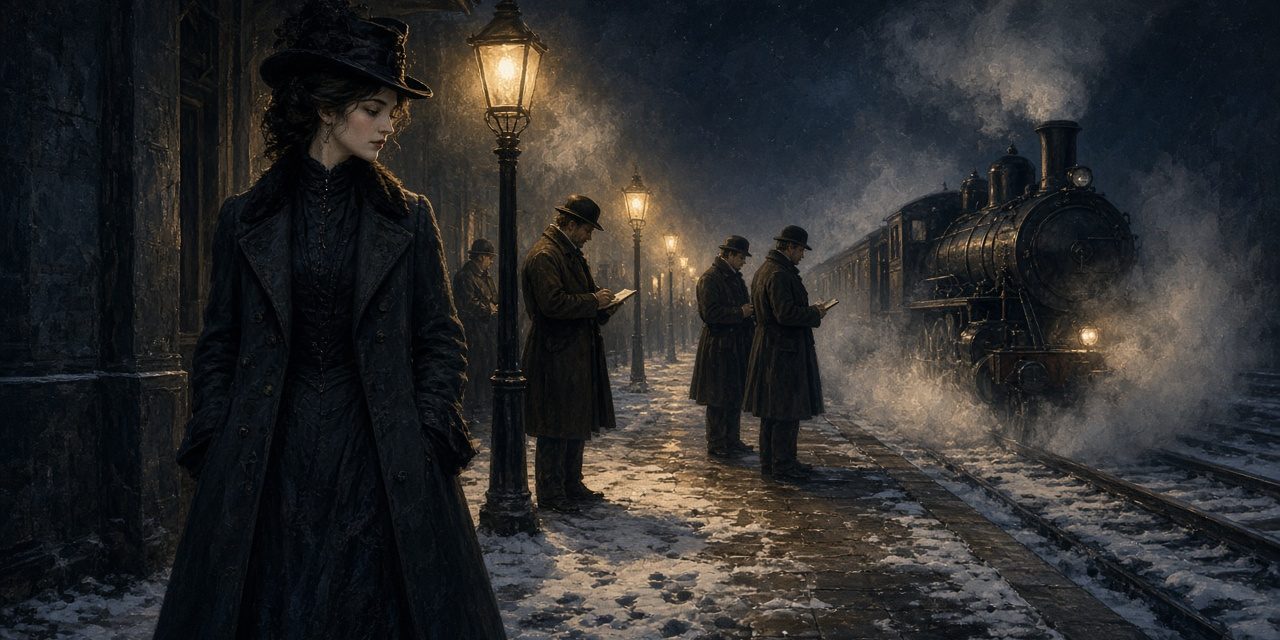
Nellie Bly in Pittsburgh is usually told as a prologue: a letter to an editor, a borrowed pen name, a note left on a desk, then New York and the world. The Pittsburgh chapter has an epilogue too. On the night of January 24-25, 1890, her train came east through Ohio and over the river at Wheeling, and she stayed awake to see Pittsburgh. A crowd of newspapermen was waiting at the depot in the small hours, many of them, the Commercial Gazette said, her “old newspaper associates.” Not quite three years earlier she had been a Dispatch reporter whose editors kept handing her fashion and the arts.
November 14 is the anniversary of the day in 1889 that she set out on the 72-day trip, but she did not leave from Pittsburgh. The Augusta Victoria steamed out of Hoboken, New Jersey, at 9:40 that Thursday morning, according to the Heinz History Center’s day-by-day account. By then Bly had been gone from Pittsburgh for two and a half years. What Pittsburgh gave her is better told in two parts: the start, and the night she came back.
A girl from Armstrong County
Elizabeth Jane Cochran was born on May 5, 1864, in Cochran’s Mills, Armstrong County, about thirty miles northeast of Pittsburgh. Her father, a county judge for whom the town was named, died in 1870, and his estate was auctioned. A teachers’ guide published by the Pittsburgh CLO and the History Center says her mother moved with her daughters to Pittsburgh in December 1880 to be nearer her oldest son. The guide says Elizabeth tried tutoring, nannying and housekeeping, and wrote stories hoping to get into a newspaper. By January 1885, the History Center says, she was living in Allegheny City, now the North Side. She was twenty.
The letter, and what is disputed about it
The outline is solid. The Pittsburg Dispatch ran a column by Erasmus Wilson, who wrote as “the Quiet Observer,” in reply to a reader who didn’t know what to do with five unmarried daughters. Wilson called working women “a monstrosity,” according to the Associated Press and Mental Floss, and wrote that a woman’s place was defined “by a single word — home.” A reader signing herself “Lonely Orphan Girl” answered him. The managing editor, George Madden, ran a notice asking the writer to come forward. She did, and he hired her at five dollars a week, per the History Center.
The details diverge. The teachers’ guide puts both the column and Madden’s notice on January 17, 1885, which seems unlikely to be true of both. Most accounts say only “January 1885.” Accounts also differ on her first piece for the paper. Some summaries give it the title “The Girl Puzzle” and say it was about one subject, others describe it differently, and Mental Floss says Madden asked her to turn her letter into a piece on “the women’s sphere.” Without the original page in hand, the safest statement is that she wrote for the Dispatch within days of her letter, and that her early subjects included divorce and working women, according to Encyclopedia.com.
The name is less certain still. Madden needed a byline for her, and the song was Stephen Foster’s “Nelly Bly.” The AP’s version has a copy boy whistling it as he passed. The teachers’ guide says Madden simply chose it. The AP says Madden misspelled the first name, and “Nellie” stuck. None of the sources consulted cites a contemporary record of the moment, so these should be read as stories.
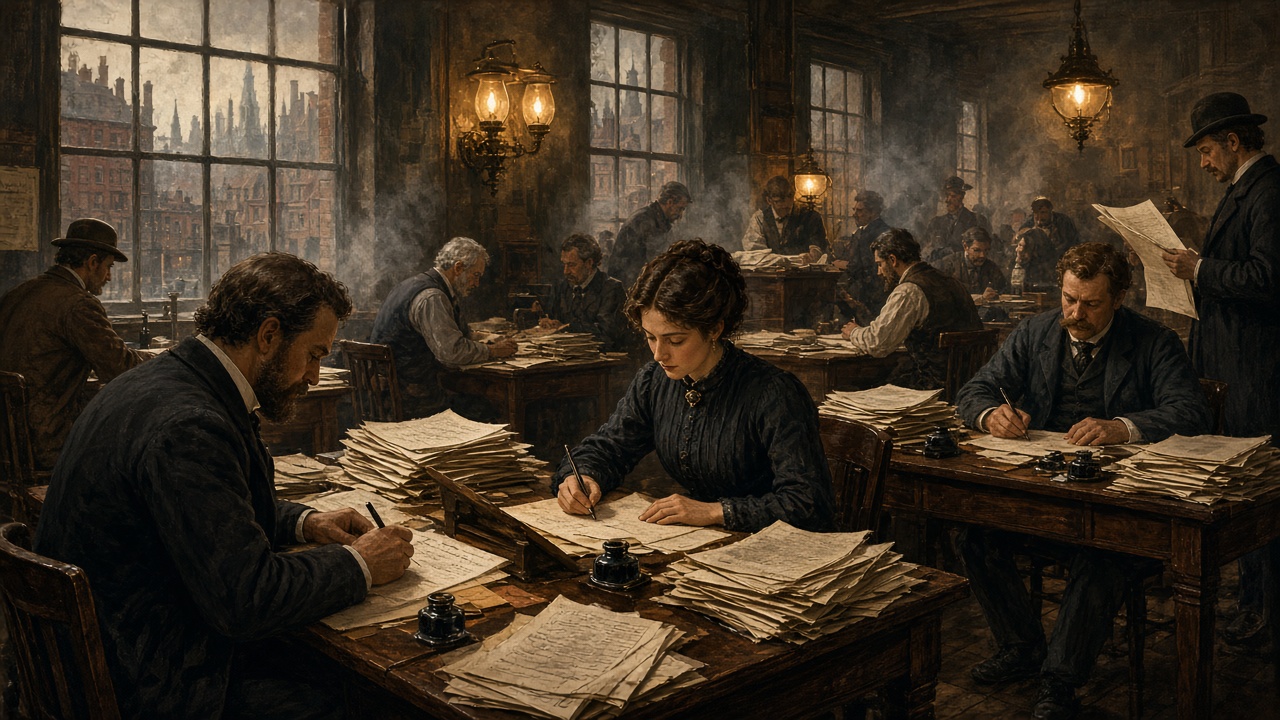
Two years on the paper
Encyclopedia.com says she wrote about divorce, working girls and factory conditions in her first year, then was moved to fashion, society, gardening and the arts. The teachers’ guide says she asked for something bigger; Encyclopedia.com says she quit the paper in December 1885 and came back with a pitch from Mexico. On February 24, 1886, the Dispatch ran “Nellie in Mexico,” the first of more than thirty installments. The teachers’ guide says she came back to Pittsburgh on June 22, 1886, and other accounts say she left early because she feared arrest after criticizing the Mexican government. Back at the paper she was given the arts again. Her last story for the Dispatch ran March 20, 1887.
Then she left a note for Wilson. Most versions read, “I am off for New York. Look out for me.” The Heinz History Center’s account has it as “Look for me.” She had left Pittsburgh. Wilson, the man whose column had started it, stayed her friend. Encyclopedia.com says her letters to him in the years after the world trip show that she struggled with depression, and a pair of 1967 Pittsburgh Press Sunday magazine pieces by George Swetnam, listed in the same bibliography, were devoted to her letters to him and their friendship.
Three in the morning
The finish of the race ran straight through Pittsburgh. Bly reached the Bay Area on January 21, 1890 (the teachers’ guide says the 20th), and crossed the country on a special train, then on regular service east of Chicago. The History Center says she crossed the Ohio River at Wheeling and “stayed up most of the night to greet a crowd of newspapermen at Union Station in her home city of Pittsburgh,” resting only after the train left the city “at around three in the morning.” Rivers of Steel reports that the January 25 New York World evening edition gave her arrival in “Pittsburg” as 3:10 a.m., under the headline “Ovations at Pittsburg, Harrisburg, Lancaster and Philadelphia.” The two timings do not quite fit together, but both put the stop in the small hours.
The Pittsburgh paper that morning, the Commercial Gazette, ran a long, multi-deck headline. A bibliography of Pittsburgh sources on Bly lists it as “Home Again: Nellie Bly Reaches Her Native City This Morning: Welcomed at the Depot: By Many of Her Old Newspaper Associates in Pittsburgh: Counts Herself a Winner,” and goes on to mention that “Nellie Mourns the Ill-Health of the Monkey Given Her at Singapore.” The headline’s “native city” was generous. She was born in Armstrong County, and Pittsburgh was where she had lived and worked.
The station is another detail worth getting right. The Union Station that stands today, by Daniel Burnham, did not open until 1901. The depot she stopped at that night would have been the Pennsylvania Railroad’s makeshift replacement at Grant Street and Liberty Avenue, built after the 1877 railroad riots and described by one local paper as looking “like a country barn or a fourth-class livery stable.” That is a story told elsewhere on this site. The sources consulted say “Union Station” and do not describe the building, so the identification is an inference.
The rest was a day of cheering crowds. In Philadelphia at 1:25 p.m. she met a welcoming party that included her mother, and the train reached Jersey City at 3:51 p.m. The trip had taken 72 days, 6 hours and 11 minutes.
What remains
The Pennsylvania Historical and Museum Commission’s Nellie Bly marker stands in Apollo, Armstrong County, at 500 Terrace Avenue, in front of the house where she lived as a child, which is privately owned. It was dedicated July 22, 1995. The Heinz History Center’s online account of her trip credits its collection for a Nellie Bly trading card, and its Library and Archives for the Nellie Bly game printed in the New York World on February 26, 1890, according to the captions. Rivers of Steel reported in 2020 that a figure of Bly would join those of George Washington and Franco Harris at Pittsburgh International Airport, and City Cast Pittsburgh later described it as in place. Check with the museum and the airport before planning a visit around either.
Pittsburgh was where she learned that a letter can be a job application. It also gave her a small part in her own legend: on one cold night in January 1890, the people waiting for her at the depot were the ones who had known her when her name was still new.