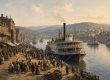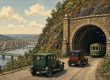


Nestled along the Monongahela River just southeast of Pittsburgh lie the remnants of once-mighty steel towns: Braddock, Homestead, Duquesne, McKeesport, and Clairton. These towns weren’t just dots on the map—they were vital arteries in the industrial heart of America. They forged the steel that built bridges, skyscrapers, and warships. But today, echoes of molten furnaces and clanging mills have been replaced by silence and shuttered storefronts. This is the story of the rise, fall, and enduring legacy of the Mon Valley’s forgotten steel towns.
The Birth of the Mon Valley Steel Empire
In the mid-19th century, the Monongahela River became a natural corridor for industry. Its proximity to coal mines, iron ore, and river transport made it ideal for heavy manufacturing. The 1870s saw the rise of Andrew Carnegie, whose Edgar Thomson Works in Braddock opened in 1875 and revolutionized steel production with the Bessemer process. Homestead followed soon after, growing into one of the largest steelworks in the world.
Braddock: From Boomtown to Breaking Point
Braddock was once the pride of American industry. With the Edgar Thomson Steel Works operating 24/7, the town boomed. Immigrants from Eastern and Southern Europe poured in for jobs. At its peak, Braddock had 20,000 residents, multiple movie theaters, a thriving business district, and a grand Carnegie Library—the first Carnegie library to open in the U.S.
But the collapse came hard. The steel mill automated and downsized. Jobs vanished. Braddock’s population fell from a peak of 20,879 in 1920 to 1,721 in 2020, a decline of more than 90%. Blight spread, and entire blocks were abandoned. Today, though the mill still runs, Braddock remains a symbol of industrial decline—and community resilience.
Homestead: Battlefields and Boom Years
Homestead holds a unique place in labor history. In 1892, it was the site of the bloody Homestead Strike, a defining clash between steelworkers and Carnegie Steel’s private security force, the Pinkertons. The strike failed, but it galvanized the labor movement and remains one of the most studied labor conflicts in U.S. history.
During the early 20th century, Homestead rebounded, becoming an industrial powerhouse once more. Its steel powered both World Wars. Yet by the 1980s, global competition and corporate mismanagement spelled disaster. The Homestead Works closed in 1986. Today, The Waterfront shopping center occupies part of the old mill site.
Duquesne and McKeesport: The Middle Valley Collapses
Further down the river, Duquesne and McKeesport tell similar stories. Duquesne once hosted one of U.S. Steel’s most productive plants. McKeesport was home to National Tube Works. These towns thrived on the rhythm of shift whistles and mill schedules.
But they were hit just as hard—if not harder—than Braddock or Homestead. Poverty soared. Infrastructure crumbled. Schools closed. The exodus was swift and painful.
Clairton: The Last Flame Still Burns
While much of the Mon Valley industry has disappeared, Clairton remains home to the Clairton Coke Works, the largest coke manufacturing facility in the U.S. Owned by U.S. Steel, it reportedly supplies coke to the blast furnaces at Edgar Thomson.
Yet Clairton has paid the price. Air quality has long been a concern, and health studies show higher-than-average rates of asthma and related illnesses. Despite the pollution and poverty, the plant is still a major employer—and a reminder of what once was.
Community Fallout: People Left Behind
The collapse of the steel industry devastated not only the economy, but the social fabric of the Mon Valley. Families that had worked in mills for generations found themselves jobless, often with limited skills transferable to other sectors. Poverty deepened. Crime increased. Public services shrank. Schools lost funding. Hospitals closed.
In many cases, residents didn’t just lose jobs—they lost identity. Steel was more than a livelihood in these towns. It was a way of life.
Federal Neglect and Political Apathy
While some point to foreign competition and automation, many residents also blame decades of federal neglect. Promised retraining programs never fully materialized. Federal investment focused on big cities, leaving post-industrial towns behind. Pittsburgh transitioned to a service economy. The Mon Valley didn’t.
Mayors and local leaders tried to advocate, but with dwindling tax bases and state-level indifference, progress was slow. The Mon Valley became a cautionary tale of American deindustrialization.
Cultural Legacy: Art, Music, and Memory
Despite the decline, the spirit of the Mon Valley endures. Artists and filmmakers have found inspiration in the rusting mills and resilient people. George Romero filmed Martin (1976) in Braddock.
Braddock’s revival efforts—including former mayor John Fetterman’s initiatives to attract artists and entrepreneurs—have gained national attention. Murals, community gardens, and pop-up art exhibits dot the landscape, offering sparks of hope.
Lessons from the Mon Valley
What happened in Braddock, Homestead, and their sister towns isn’t just a Pittsburgh story—it’s an American one. It’s about what happens when industry disappears, when working-class jobs vanish, and when communities are left to pick up the pieces.
It’s also about resilience, pride, and memory. These towns are not just ruins—they’re reminders. They deserve to be remembered not for what they lost, but for what they gave: the backbone of a nation built on steel.
Braddock Today: Library, Mill, and Population
Braddock’s population peaked at 20,879 in 1920 and stood at 1,721 in the 2020 census. The Edgar Thomson Works, which Andrew Carnegie opened in 1875, is still making steel on the same riverbank.
The Braddock Carnegie Library, which opened in 1889 as the first Carnegie library in the United States, closed in the 1970s, was saved from demolition by a community effort, and reopened in 1983. A four-year, $21 million restoration was completed in May 2025, and the building now operates as Carnegie One. The town’s hospital, UPMC Braddock, closed in January 2010, and John Fetterman served as mayor from 2006 until he became Pennsylvania’s lieutenant governor in 2019.
U.S. Steel, which owns the Edgar Thomson Works, has announced plans for a new hot strip mill at the Braddock plant to replace the aging Irvin mill, with production expected around the end of the decade. The scope and timing of those plans have changed more than once since 2022, so check current company announcements for the latest.
Homestead: The Pump House and the Carrie Furnaces
The Homestead Works closed in 1986, but a few pieces of the mill survive. The Pump House and its adjoining water tower, at 880 E. Waterfront Drive in Munhall, stand on the site of the July 6, 1892 Battle of Homestead, and historic markers there explain both the fight and the pump house’s role supplying water to the mill. For the strike itself, see our articles on the Homestead Strike of 1892 and labor’s bloody stand at Homestead.
Across the Monongahela in Swissvale and Rankin, Furnaces 6 and 7 of the Carrie Blast Furnaces — once part of U.S. Steel’s Homestead Steel Works — are a National Historic Landmark, with a documented period of significance of 1906 to 1941. They are managed within the Rivers of Steel National Heritage Area, which runs tours; see Rivers of Steel’s Carrie Furnaces page for visiting information.
Clairton: A Working Plant and Its Costs
The Clairton Coke Works is still operating, and it is still dangerous. On August 11, 2025, a coke-oven-gas explosion at the plant killed two workers, Steven Menefee and Timothy Quinn, and injured eleven others. The U.S. Chemical Safety Board’s final report, issued in August 2026, found that pressurized water used to wash a valve caused an overpressure that ruptured it and released flammable gas, and cited inadequate procedures and occupied buildings located too close to hazardous piping. The CSB report is the primary record.
Keep Reading
For the larger story of these towns, see the Steel Valley story, the rise and fall of the Pittsburgh steel industry, the technologies that built and broke the steel empire, and Andrew Carnegie.