
The old Clark sign now sits at the end of a parking lot on Pittsburgh’s North Side, a long way from the factory roof where it once advertised the candy bar below it. The story of Clark Bar Pittsburgh is mostly a story of that building: a candy company that grew up in Allegheny City, bought a factory on Martindale Street in 1911, and made one of the country’s best-known chocolate bars there until 1986. Much of what is repeated about the bar is repeated without a source, so this article keeps track of which parts are documented.
David Clark’s company
The Heinz History Center says the D. L. Clark Company “traces its roots to Pittsburgh’s North Side in 1886,” when David L. Clark, an Irish immigrant, began selling candy from a horse-drawn wagon. The Post-Gazette’s “Digs” feature says the company’s history “stretches back to 1884,” so even the start date varies. The Post-Gazette says Clark was born in 1864, came to the United States at eight and settled in Allegheny City, which Pittsburgh later absorbed; for that city see the SteelCityHistory article on the rise and fall of Allegheny City. Digs says his Teaberry gum, inspired by the wintergreen flavor of teaberry leaves he chewed as a child, debuted in 1900 after the company secured a patent.
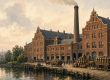
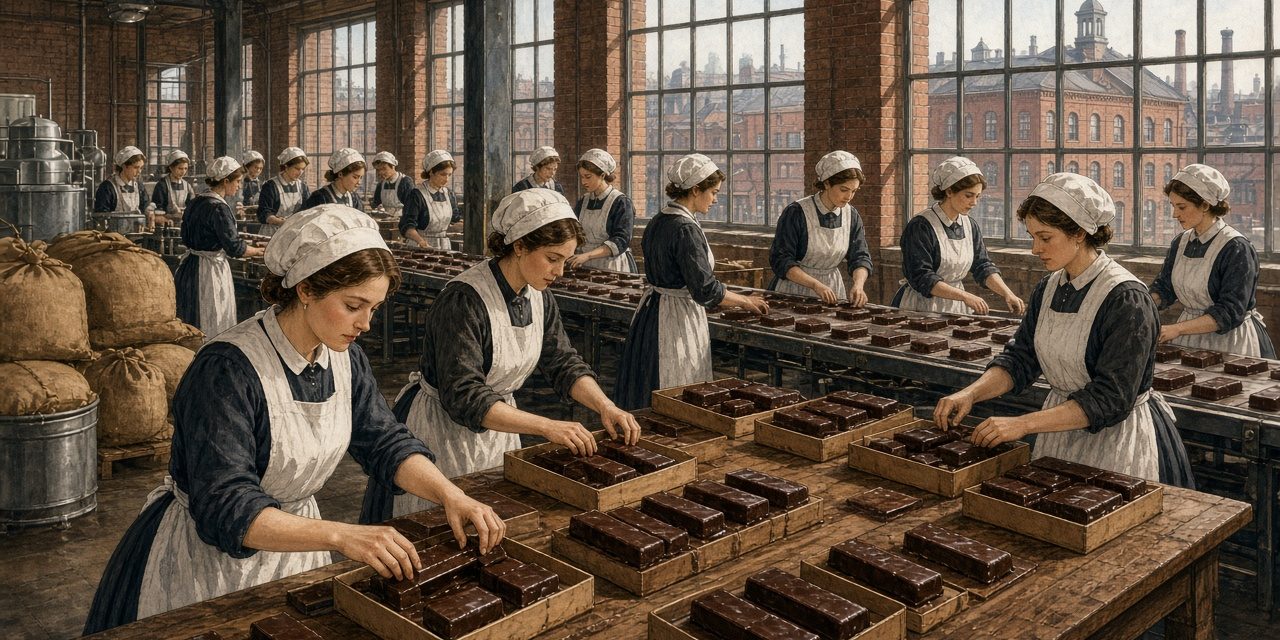
In 1911, according to the Heinz History Center and Digs, Clark bought the James McClung candy and cracker company on the North Side, bringing candy and gum under one roof. A Brookline history site puts the address at 503 Martindale Street. By 1920, the Heinz History Center says, the company was making close to 150 kinds of candy.
The 1917 bar and the soldiers’ story
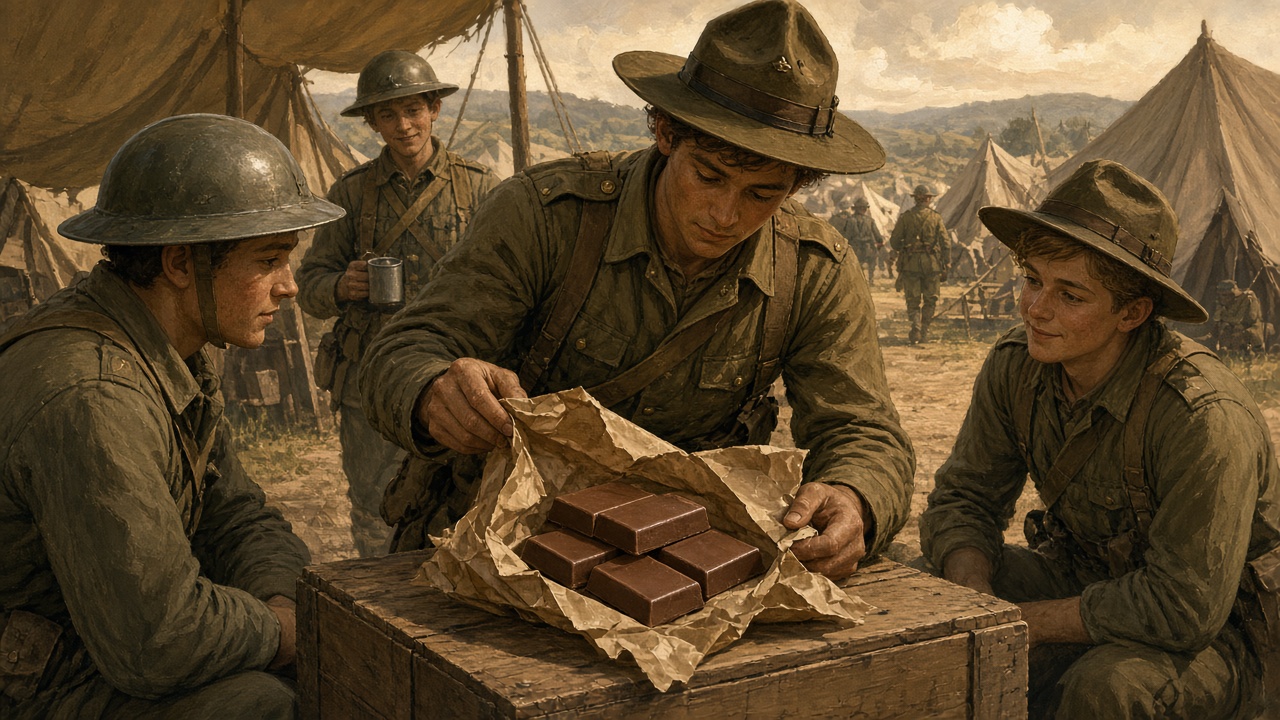
The Clark Bar is usually dated to 1917. The Associated Press says D. L. Clark created it “in 1917,” and Rick Sebak’s PBS program says the bars “were first produced around 1917.” The story told with the date is that the United States had just entered World War I, Clark offered to supply the troops, chocolate drops proved too cumbersome to ship, and military officials asked him for a sturdier product. The result, in the Post-Gazette’s words, was a four-inch, five-cent bar with a crunchy peanut-butter core. The Associated Press gives a plainer version: the bars were “marketed as individually wrapped bars to facilitate shipment to American troops.”
No 1917 document confirming any of this was found for this article. The military-request version appears in nearly identical words in the Post-Gazette and in the Brookline history, which suggests one source. The Heinz History Center’s company history does not date the bar, and says that after 1920 Clark “recognized the growing market for candy bars” and, over the next ten years, concentrated on five-cent chocolate bars. That is compatible with a 1917 introduction, but it suggests the bar’s big years came later. A Portland Press Herald column, citing the book Sweets: A History of Candy, calls the Clark Bar America’s first successful “combination” candy bar, with a thin milk-chocolate shell around a non-chocolate filling. The book itself was not available for this article.
A million bars
The scale is better documented. The Post-Gazette says that by 1929 the factory was making more than 900,000 bars a day, and quotes the Pittsburgh Press of that year calculating that a year’s worth, at 300 working days, laid end to end would reach more than 17,000 miles. The arithmetic holds: 900,000 four-inch bars over 300 days comes to about 17,000 miles.
The war helped again. A 1948 Pittsburgh Press photo caption, reproduced by Digs, says 80 percent of the plant’s production during World War II went to military personnel. The Post-Gazette also says that when strikes halted production in 1942 and 1943, the federal government stepped in and declared the candy an “essential wartime product.”
Sales, a giant bar, and the move out
The Clark family sold the company to Beatrice Foods in 1955 according to the Associated Press; Digs says “the mid-1950s.” Leaf bought it in 1983. In 1981, a Kennywood photo in Digs shows a 3,100-pound Clark Bar, about 15 feet long, brought to the park in an attempt at a Guinness record; for the park see the SteelCityHistory history of Kennywood.
The North Side plant closed in the spring of 1986, according to the Heinz History Center. Digs says Leaf announced in 1985 that it would close it, and that Mayor Richard Caliguiri negotiated incentives so production would stay in the region, with the city buying Leaf a new facility in O’Hara Township. A 1991 United Press International story says instead that Leaf secured $4.9 million in low-interest financing from the county for a modern plant in O’Hara. The two accounts differ on whether the city or the county was the source.
In May 1991, UPI reported, Pittsburgh financier Michael Carlow bought the Clark Bar name and the O’Hara plant from Leaf. UPI said the plant made more than 50 million bars the previous year and employed about 170. After years of instability, the company that had bought the brand was reorganized in 1995 as Clark Bar America, and the New England Confectionery Company, known as Necco, bought it in May 1999, the Heinz History Center says. Production moved to Revere, Massachusetts. Necco went bankrupt in 2018, and on September 6, 2018 Boyer Candy of Altoona, which makes the Mallo Cup, announced that it had bought the rights, recipes and equipment. WTAE reported in October 2019 that Boyer’s bars were about to reach stores. Availability can change, so check before you go looking.
What remains
The factory still stands at 503 Martindale Street as the D. L. Clark Building, now offices. RoadsideArchitecture.com says the roof sign was built in 1948, originally lit with neon, and that after the Tribune-Review took over the building in 1999 the sign was restored and moved to the back of the parking lot. The Heinz History Center’s Detre Library holds the D. L. Clark Company records (described in a 2014 Heinz History Center library blog post), 1923 to 1992, with photographs, advertisements and annual reports.