
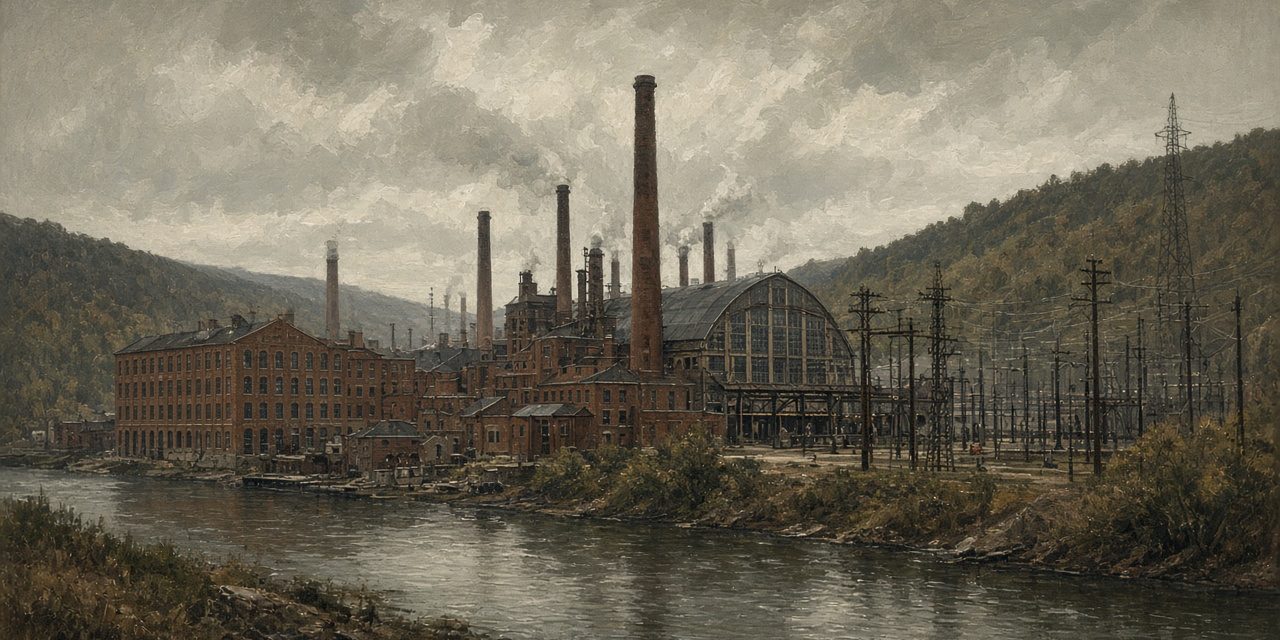
Westinghouse Electric history did not end when George Westinghouse lost control of the company in the wake of the Panic of 1907. It barely slowed down. The company he founded in Pittsburgh in 1886 outlived his leadership by more than a century, changed its name to CBS, sold off its factories, and survives today in Cranberry Township as a nuclear company owned by two Canadian firms and now planning to go public. This is the story of what happened to Westinghouse after Westinghouse.
How the company left its founder, 1907 to 1911
The fullest early account comes from A Life of George Westinghouse, published in 1921 by Henry G. Prout for the American Society of Mechanical Engineers. When the Panic of 1907 hit, Prout writes, Westinghouse’s loans were called and the Electric Company went into receivership, with debt he puts at $43 million. It took fourteen months to get out. Under the 1908 reorganization, suppliers took stock instead of cash, and Prout says more than half the new board represented the bank and merchandise creditors, leaving Westinghouse as president “with powers considerably limited.”
Sources disagree on the date of the final break. A Pittsburgh Post-Gazette article of July 30, 1910, posted by the Westinghouse Legacy organization, carried the headline “Westinghouse Dropped from Office,” and the Pittsburgh Technology Council, in an archived article, says he formally retired from the Electric Company in 1910. Prout gives 1911: that year, he writes, Westinghouse “gave up definitely any effort to recover his former controlling position and his official relations with the Electric Company ceased.” The founder’s own life is told in the SteelCityHistory profile, George Westinghouse: The Forgotten Genius Who Lit America; this article follows the company.
The company without its founder
Westinghouse Electric and Manufacturing kept growing for decades under managers the founder never chose. Time‘s 1936 report counted 46,000 stockholders and 35,000 workers, run by chairman Andrew W. Robertson, who had come from Pittsburgh’s streetcar system in 1929, and it noted that the anniversary booklet left out the ouster entirely. The New York Times, in 1997, credited the company with setting up the nation’s first radio station, KDKA, in Pittsburgh in 1920, and Toshiba’s 2006 description of the business says Westinghouse entered the nuclear business in 1957. The SteelCityHistory history of the Westinghouse legacy covers the products, the plants and Shippingport.
From Westinghouse to CBS
The most surprising turn came in the 1990s. Westinghouse Electric Corporation completed its purchase of CBS Inc. on November 24, 1995, for about $5.4 billion, according to the New York Times; UPI put it at $5.5 billion. On December 1, 1997, the company changed its name to CBS Corporation, according to its own SEC filing that day, and the Times reported that it was moving its headquarters from Pittsburgh to New York. Variety said the name change reflected the sale of most of its industrial businesses. The company George Westinghouse founded had become a broadcaster.
The nuclear business, passed hand to hand
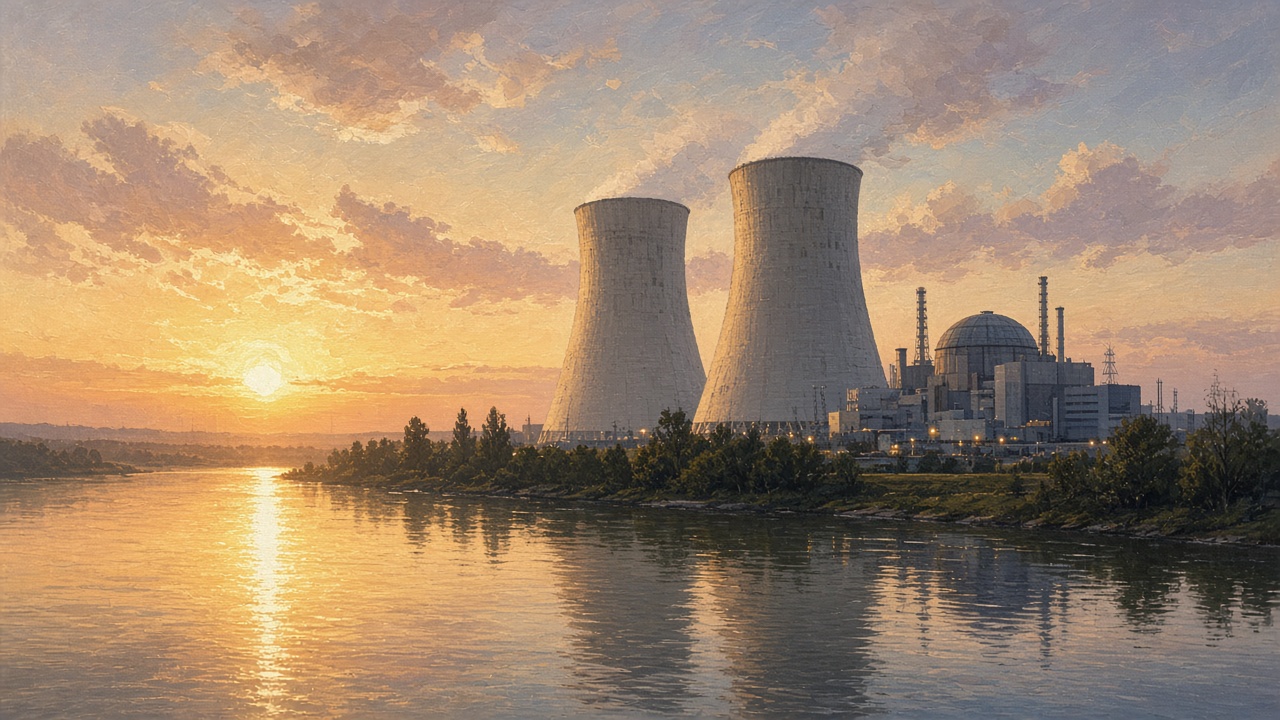
The part that still carries the name Westinghouse Electric Company is the nuclear business CBS sold off. Its owners since then, from the companies’ own releases and filings:
- 1999, British Nuclear Fuels (BNFL): A Westinghouse letter to the Nuclear Regulatory Commission says the sale of CBS’s nuclear and government services businesses to Morrison Knudsen and BNFL closed on March 22, 1999. Nuclear Engineering International reported that the commercial nuclear company went to a BNFL subsidiary.
- 2006, Toshiba: Toshiba announced on February 6, 2006, a deal valued at $5.4 billion and said it completed the purchase on October 16, 2006, taking 77 percent, with the Shaw Group at 20 percent and IHI at 3 percent. The company’s head office was then in Monroeville.
- 2017, bankruptcy: A Toshiba filing says Westinghouse’s holding company filed for Chapter 11 in New York and was deconsolidated from Toshiba on March 29, 2017.
- 2018, Brookfield: Westinghouse announced on August 1, 2018, that its sale to Brookfield Business Partners and institutional partners was complete and that it had emerged from Chapter 11. Brookfield’s SEC filing gives total consideration of $3.8 billion.
- 2023, Brookfield and Cameco: Cameco announced on November 7, 2023, that it and Brookfield had completed their purchase, with Brookfield owning 51 percent and Cameco 49 percent.
What happened to Westinghouse Electric?
On October 28, 2025, Cameco, Brookfield and the U.S. Department of Commerce signed a term sheet, filed with the SEC, under which the government would arrange financing and help with permits for new Westinghouse reactors in the United States worth at least $80 billion. In exchange the government would get an interest that, once it vests with a firm commitment to at least $80 billion of new reactors, entitles it to 20 percent of Westinghouse’s cash distributions above $17.5 billion, and, under conditions set out in the term sheet, the right to require a public offering by January 2029.
Reuters reported on July 31, 2026, that Westinghouse had confidentially filed for a U.S. initial public offering, and Bloomberg reported in September, citing unnamed people, that it was seeking a valuation of more than $50 billion. Reuters describes the company as based in Cranberry Township. As of late October 2026, the registration statement had not been made public, and no share price or offering date had been announced. If the offering happens, the business George Westinghouse lost to his creditors in 1908 would be back on the stock market, this time as a nuclear company.