

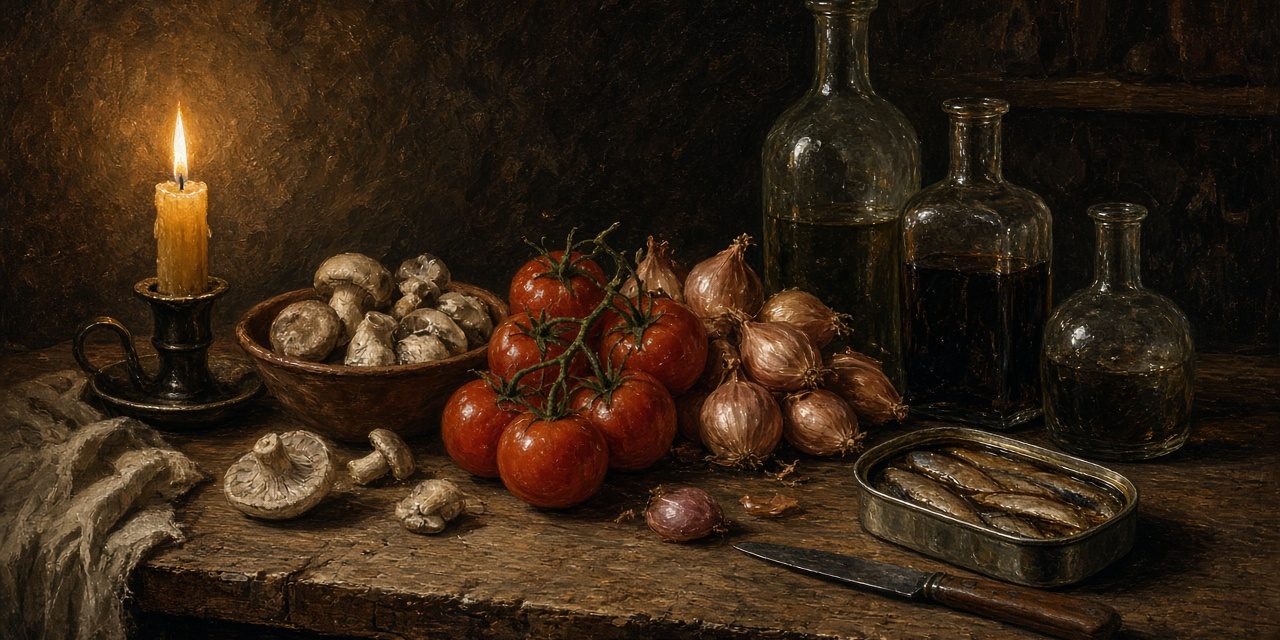
Who invented ketchup has no single answer, and it is certainly not Henry Heinz. By the time Heinz added tomato ketchup to his product line in 1876, the word had been in English print for nearly two centuries, cookbooks had been printing ketchups made from anchovies and mushrooms for generations, and a Philadelphia doctor’s magazine had published a tomato version more than sixty years earlier. What Heinz helped popularize was something narrower: the thick, sweet, bottled, preservative-free tomato ketchup that became the national standard. Here is what came before him.
A fish sauce with a Chinese name
The word is the oldest part of the story. The Oxford English Dictionary, as quoted on the American Dialect Society’s mailing list, traces ketchup to the Amoy dialect of Chinese, kôechiap or kê-tsiap, “brine of pickled fish or shell-fish,” and notes that the Malay kechap, sometimes claimed as the source, may itself come from Chinese. The Stanford linguist Dan Jurafsky, writing in Slate and on his blog, says the word meant fish sauce in the Southern Min language of Fujian, and that the dictionary’s editor James Murray worked out the etymology in 1889. NPR, summarizing Jurafsky, says the OED’s earliest English printing of “catchup” is from 1699, in a dictionary of slang that called it “a high East-India Sauce.” The OED entry also quotes a 1711 trade account saying “the best Ketchup” came “from Tonquin.”
Jurafsky also rejects a popular alternative, that ketchup comes from a Cantonese word for eggplant or tomato sauce. The condiment and its name, he points out, reached English centuries before anyone added tomatoes.
Anchovies, wine and horseradish: ketchup in 1727
English cooks made their own versions. The culinary historian Andrew F. Smith, in Pure Ketchup, is credited with dating the earliest published English recipe to 1727, in Eliza Smith’s The Compleat Housewife. A 1730 printing of that book, scanned by the Internet Archive, has the recipe “To make English Katchup.” It calls for a pint of white-wine vinegar, shallots, “the best Langoon White-wine,” twelve or fourteen anchovies dissolved in the wine, mace, ginger, cloves, pepper, nutmeg, lemon peel and horseradish, all shaken in a bottle for a week. There is no tomato. The book suggests putting it “into Fish Sauce, or any savory Dish of Meat,” and says “you may add to it the clear Liquor that comes from Mushrooms.”
Mushroom ketchup became a standard in its own right. The OED’s 1748 citation advises keeping a store of “Kitchup, or Mushroom Juice.” Epicurious, drawing on Smith, says mushroom ketchup was the predominant form for much of the condiment’s history, and Smith is quoted there as writing that “none of the early ketchup recipes had anything to do with the tomato.” Cookbooks of the period, according to a review of Smith’s book, give ketchups made from walnuts, oysters, cockles, cucumbers, grapes and lemons.
The first tomato ketchup in print, 1812
The tomato arrived in Philadelphia. In the January 1812 issue of the Archives of Useful Knowledge, the Philadelphia magazine of the physician James Mease, a short entry under “Domestic Economy” headed “Tomatoe, or Love-Apple Catsup” reads, in full:
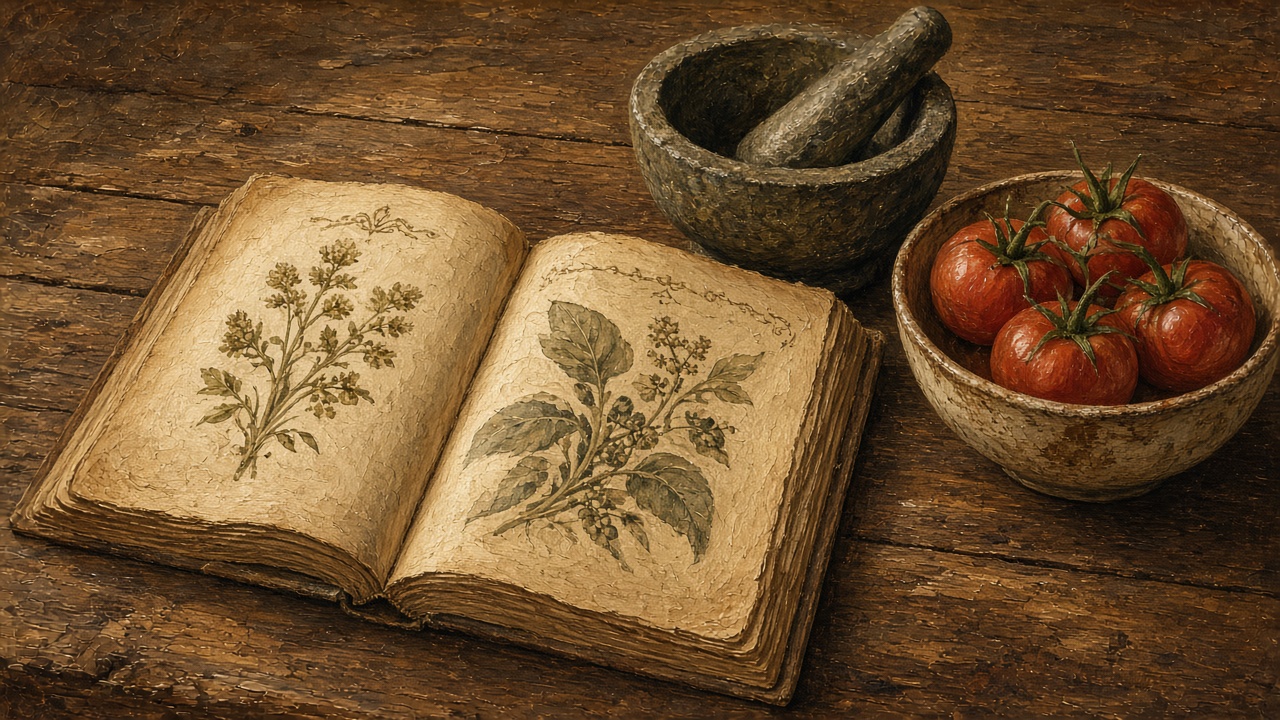
Slice the apples thin, and over every layer sprinkle a little salt; cover them, and let them lie twenty-four hours; then beat them well, and simmer them half an hour in a bell-metal kettle; add mace and allspice. When cold, add two cloves of raw shallotts cut small, and half a gill of brandy to each bottle, which must be corked tight, and kept in a cool place.
National Geographic and Epicurious, both citing Smith, call it the first known published recipe for tomato ketchup. A scan of that issue is on the Internet Archive. The “apples” are love apples, an old name for tomatoes. The recipe has no vinegar and no sugar, which Epicurious says gave it a short shelf life, and it is closer to a thin, spiced tomato sauce than to anything sold today. A food-history blog summarizing Smith adds that an unpublished New York manuscript recipe may be older, but that Smith thinks its ketchup page was probably added in the early 19th century, so the 1812 recipe keeps its claim as the earliest in print.
Bottled ketchup and the preservative problem
Tomato ketchup spread quickly once bottlers took it up, and much of what they sold was grim. The Library of Congress’s Inside Adams blog, drawing on a 1909 federal study, describes ketchup made from cannery waste, skins, cores and green or rotten tomatoes, colored with coal-tar dyes and kept from spoiling with preservatives, chiefly sodium benzoate. That study, Experiments on the Spoilage of Tomato Ketchup, by A.W. Bitting of the Bureau of Chemistry, was issued as Bulletin 119 in 1909, and the Library says Bitting and his wife, Katherine, examined more than 1,600 bottles. One sample, Katherine Bitting wrote, was “guaranteed to be made from fresh, ripe, tomatoes” but under the microscope showed “much refuse, and large quantities of fungi.”
The answer to that problem is where the story reaches Pittsburgh, and it is where this article stops. The Heinz History Center says tomato ketchup joined the F. & J. Heinz product line in 1876, and National Geographic reports that Heinz later moved to a preservative-free recipe around the turn of the 20th century, relying on ripe tomatoes and more vinegar. The Library of Congress is careful on the credit: Heinz was one of several companies, with Shrewsbury and the Columbia Conserve Company, already making preservative-free ketchup with their own recipes before the Bittings published theirs. How the company grew from there is told in the SteelCityHistory profile of Henry Heinz.
So who invented ketchup?
No one person, on the record. The sauce and its name came from Chinese and Southeast Asian fish sauces. English cooks rebuilt it with anchovies and mushrooms by the 1720s. James Mease’s magazine printed the first known tomato version in Philadelphia in 1812. And a Pittsburgh company, among others, turned it into the shelf-stable red condiment that sits on every diner table.