
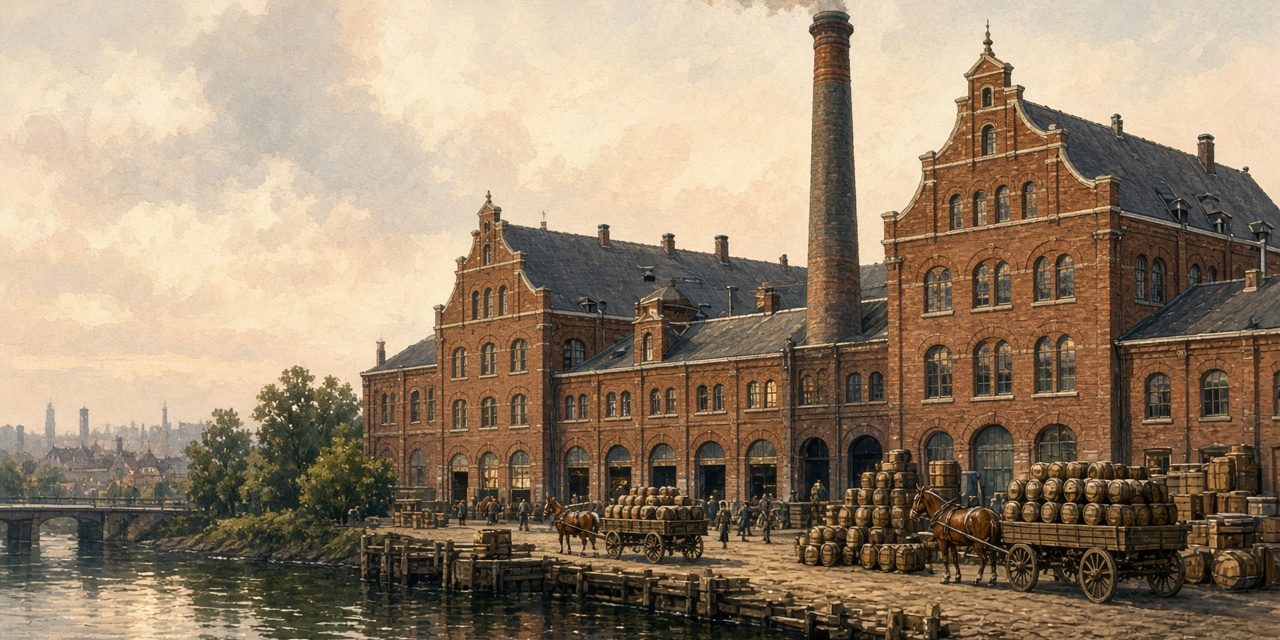
In 1933, after thirteen years of making nonalcoholic cereal beverages and near beer, a South Side brewery went back to selling beer and introduced a new label with radio spots and electrically lighted billboards. The label was Duquesne Pilsener, which Pittsburghers would call “Duke,” and the brewery that launched it had spent Prohibition as the surviving core of a combine of local breweries. By 1940 it was the biggest brewery in Pennsylvania. In 1950 it opened a brew house its architects called the finest in the United States. In 1972 it closed. The National Register of Historic Places calls its plant the most intact brewery left in Pittsburgh.
Iron City is the Pittsburgh beer everyone knows, and its story is told on this site. This is the story of its largest local rival.
A brewery on the site of two glass houses
The best account of Duquesne’s history is the 2015 National Register of Historic Places nomination for the brewery, which cites newspapers, city building permits and the company’s own history. It says the Duquesne Brewing Company was incorporated on April 4, 1899 by South Side businessmen. The other founding partners it names include a furniture dealer, a carpet weaver, a real estate dealer, an insurance agent and a milk-company man, and the lumber dealer and contractor John Benz, whose family firm built the plant. The brewery rose on the site of two former glass works, which fits a neighborhood that had turned from glass to steel.
The original building was a five-story Romanesque brewery on South 21st Street, with a permit dated September 21, 1899 and an estimated cost of $175,000. The nomination notes that the architect is unknown and that such breweries were often designed by itinerant specialists. It says the company began with 300 workers, at the end of the age of small independent breweries, and then adopted several modern methods almost at once: its own refrigerated railroad cars to ship keg beer, an electric delivery truck in 1900 (a newspaper called the contrast with the horse-drawn brewery wagons “strange and perhaps incongruous”), and pasteurized bottling by July 1901.
The beer trusts
Brewing was changing around it. The nomination estimates Pittsburgh went from one brewery in 1782 to about 40 at the peak in the late 1880s and 1890s, with the caveat that the sources vary. The consolidation that followed is why the numbers fell. It says the Pittsburgh Brewing Company, which was headquartered at the Iron City brewery, formed in 1899 from 21 smaller breweries. In 1905 Duquesne joined the Independent Brewing Company, a rival combine. The nomination says Duquesne merged with 14 other breweries, and later in the same document says Independent consolidated 17; a Heinz History Center article says Independent included Duquesne and 15 others. The count differs by source, and the difference is unresolved. Independent kept the individual plants and labels, with Duquesne as its flagship and headquarters, and claimed a capacity of 1,200,000 barrels by 1917.
Thirteen dry years
The nomination says Independent survived Prohibition by selling assets, closing 12 of its 17 branches, and producing near beer, soft drinks and colas. Its Silver Top premium lager became a nonalcoholic grain-based “cereal beverage.” A Heinz History Center article on the Friday family, which led the company, adds that Duquesne’s brewmaster Charles Wieland made a near beer and malt tonics, and that these were not successful. By the time Prohibition ended, the nomination says, only five Independent branches remained, and that Duquesne was one of them “is a measure of its agility.” Its account of the Prohibition years is thin. The nomination itself says that no work on the Duquesne plant is recorded for those years, and no source found for this article describes what happened inside the brewery day to day. The related Prohibition story, including the speakeasies, is in the SteelCityHistory history of Pittsburgh’s Prohibition years.
Duquesne Pilsener, and the cans
John A. Friday, who took over from his father, John Henry Friday, on his death in 1932, reorganized the company under its original 1899 charter, bought the remaining assets of Independent; the nomination says the company emerged as the largest brewer in Pennsylvania, at 325,000 barrels a year. The nomination says Friday knew the temperance movement was still active and that a generation had never drunk legally, and that he set out to market. Duquesne Pilsener came out in 1933 with billboards and radio, and the nomination says Duquesne was the first western Pennsylvania brewery to advertise on the radio. It also says Duquesne was the first Pittsburgh brewery to sell beer in cans, with cone tops sealed by bottle caps, packaged at a McKees Rocks plant it bought in 1935. The nomination’s own comparison says Fort Pitt introduced flat-top cans in 1935 and that Iron City tried a steel can in 1936 and dropped it. By 1940 Duquesne was brewing 690,000 barrels a year, which the nomination says made it the eighth-largest brewery in the United States, citing the brand’s own history. No source found for this article says when the “Prince of Pilseners” slogan began. The Heinz History Center holds a Duke can that carries it.
The beer war
Pittsburgh’s breweries were caught up in a union fight that the Post-Gazette‘s Digs project in 2017 called “Pittsburgh’s Forgotten Beer War.” In October 1946 the AFL began a boycott of deliveries from Duquesne, Iron City and Fort Pitt over which union represented brewery drivers and bottlers. Matt Moret, who wrote the piece, found at least 23 bombings of distributors over four months in Pittsburgh Press and police records, and he says Duquesne’s Carnegie plant was among those that shut down after loading-dock brawls. A House subcommittee later called the strike “without any legal justification.” The war ended April 2, 1947. The National Register nomination does not mention it.
The brew house of 1950
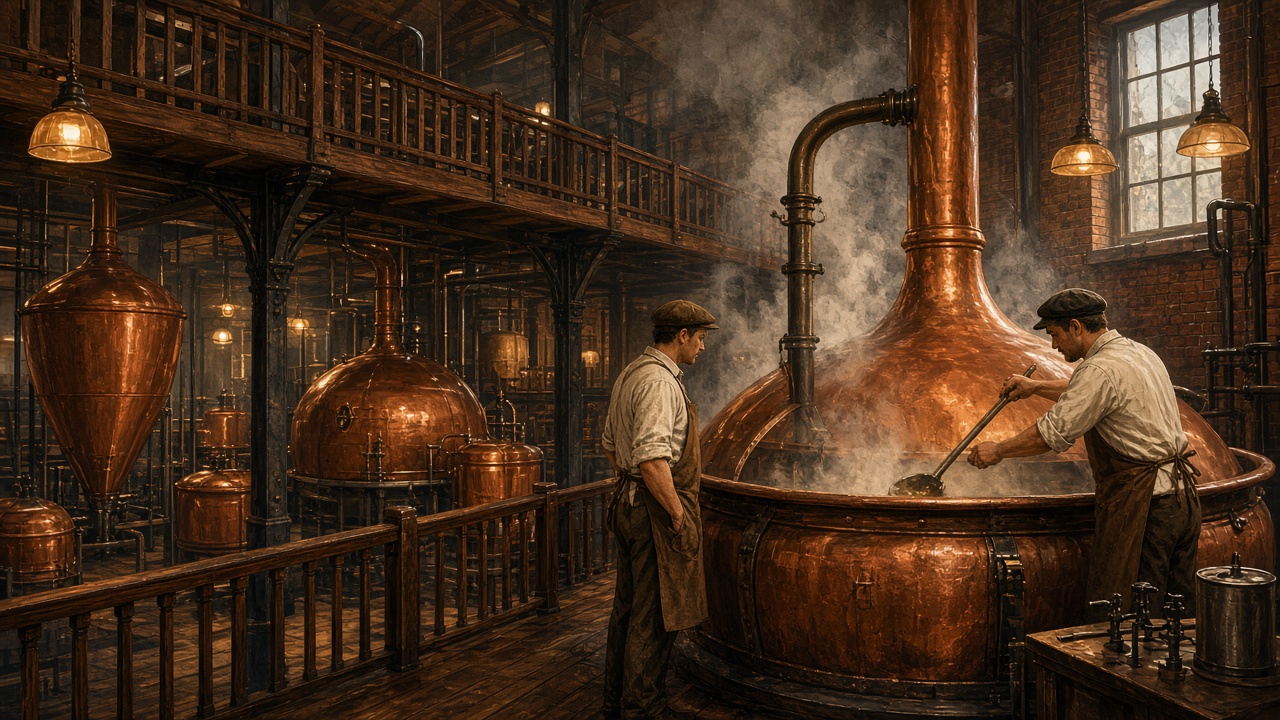
Duquesne’s heyday followed. The nomination says that in a late 1940s contest, “Duke” outsold Iron City and was the most popular beer in Pittsburgh and Pennsylvania, and that the plant produced up to two million barrels a year. It spent $3.5 million on a new brew house, which opened in June 1950, designed by Harley, Ellington & Day of Detroit, a firm that specialized in breweries. International Style, it included an “electronic brain” for tracking materials and a tap room and projection booth for shareholders. The Post-Gazette gave the opening four pages and wrote that “many observers believe that Duquesne has built a monument to its first half-century.” Mayor David L. Lawrence congratulated the company. (A 1985 piece in a brewing magazine cites $10 million for the same building. This article uses the nomination’s figure.)
103 days, and one skunked batch
In 1952, according to the nomination, all 2,100 brewing workers in the Pittsburgh area struck for 103 days over wages. The breweries could not produce beer, and drinkers switched to national brands; “many never switched back.” All three big breweries lost money and market share. Fort Pitt, which had been selling more beer than Duquesne in 1949 according to one brewing historian, fared worst. The nomination says Duquesne and Iron City threw out their stored beer after the strike, correctly supposing it to be spoiled, while Fort Pitt put its old beer on the market and never recovered. Fort Pitt’s brew house and stock house in Sharpsburg were torn down in 1961; its Art Moderne office and bottling buildings remain. The local joke, still in circulation according to Father Pitt’s blog, is that Fort Pitt’s slogan “That’s It” got a new meaning.
Duquesne did recover. The nomination says Duquesne was the largest brewery in Pittsburgh by sales in 1955, made a million barrels in 1956, and bought television time on a scale that put it 30th among all national and regional advertisers in 1956, ahead of Procter & Gamble and Coca-Cola, according to Billboard. But after 1960 costs rose and national brands pressed. Of 735 American beer makers after Prohibition, only 70 remained by 1971, the nomination says. In 1965 the Justice Department blocked Pittsburgh Brewing’s attempt to buy Duquesne on antitrust grounds, according to the brand’s later history. Chairman Lewis Koenig died in 1963, and in 1966 a stock fight ended the Friday family’s control. The brewery stopped operating in 1972, and C. Schmidt & Sons of Philadelphia bought its brands.
What remains
The nomination calls Duquesne “the most intact example of a brewery in Pittsburgh, standing complete as it was at the brewery’s peak.” The complex between South 21st and 23rd Streets was listed on the National Register on May 11, 2015, and the full nomination is available from the National Park Service, with its history, building permits and photographs. At the time it was written, the 1899 brew house was home to the Brew House Association, an artists’ collective, since 1991; check what is there now. Most of the small breweries that dotted Pittsburgh neighborhoods in the nineteenth century are gone. The nomination says the Hauch and Mueller breweries were demolished, that one stock house of the Baeuerlein brewery in Millvale and the foundation of the Hoehl brewery in Millvale are what remain of those two, and that the Allegheny Brewing Company in Woods Run, which stayed independent of the trusts, lasted only until 1911.
The beer came back. Mark and Maria Dudash revived the Duquesne name in 2008 and the beer in 2010. TribLive reported in March 2025 that Bill Clevenger had revived it again, brewing at City Brewing’s Latrobe plant. Check whether it is still on shelves before planning a tasting around it.