
On October 1, 1968, a movie premiered at the Fulton Theater on Sixth Street in downtown Pittsburgh. It had cost somewhere around $100,000 to make, and it was the first real feature for nearly everyone involved, according to the University of Pittsburgh’s archive. John Russo, who co-wrote it and played one of its ghouls, remembers the night this way: he and producer Russell Streiner handled the premiere publicity themselves because they did not trust the distributor to do anything, so they brought in klieg lights, red carpets and limousines. “People ate it up,” Russo told the Pittsburgh City Paper fifty years later. “The movie got a standing ovation in a packed theater and it took off.”
The film was Night of the Living Dead. Most people know that George Romero made it near Pittsburgh. Fewer know how Pittsburgh made it: a commercial film shop, a local TV horror host, a handful of small investors, a rented farmhouse that was later bulldozed, and a copyright mistake that nobody planned. This is a Halloween story, but it is a documented one, and it is about a business as much as a monster.
A film shop with a big camera
Romero was born in the Bronx and came to Pittsburgh in the late 1950s to study at Carnegie Tech, now Carnegie Mellon. Streiner, in a 2018 interview, said Romero arrived in 1958 and that the two soon formed a company with friends, the Latent Image. They made commercials and industrial films. The Image Ten group’s own history says the early work included segments for WQED and the Fred Rogers show.
It was paying work, and it paid for equipment. In 1966, Streiner recalled, an advertising agency hired the company to shoot tourism films promoting Pennsylvania’s fall foliage, on the condition that they use 35mm film. They bought a 35mm camera to do it. “That was the camera that then filmed Night of the Living Dead,” he said. Meanwhile their friends Karl Hardman and Marilyn Eastman ran a sound studio on Smithfield Street, Hardman & Associates, and acted in the commercials. They would end up in the cast, too.
Chilly Billy and the horror package
Western Pennsylvania had a habit of watching horror on Saturday night. Bill Cardille, known as “Chilly Billy,” hosted Chiller Theater on WIIC, Channel 11, from the early 1960s until the early 1980s. Sources differ on the exact years: Image Ten says 1964 to 1983, and the University of Pittsburgh’s library says 1963 to 1984. Pitt describes him as a pioneer of the horror-host format who broke up old public domain horror movies with wry, low-budget skits. By Pitt’s account, Night of the Living Dead itself later became a frequent feature on the show.
Gary Streiner, the film’s sound engineer, told the City Paper that WIIC had bought a package of five horror films, and that Russ Streiner and George Romero watched the first one the night it premiered and said, “We can do better than that.” The Image Ten history also names Attack of the Crab Monsters as the kind of picture they thought they could beat. Cardille promoted their film on his show nearly every week, Romero later said, and ended up in it. He plays himself, a Channel 11 reporter interviewing a police chief about how to deal with the dead.
About $600 each
The idea, according to Image Ten’s account, came at a lunch where Russo suggested that ten of them each put in $600. The company, Image Ten, was formed in January 1967, and shares were sold that May. The money did not go far. One published production history says production stopped several times while Romero used early footage to persuade more investors, and that the budget grew to about $114,000. The University of Pittsburgh’s Romero archive says “around $100,000,” and Variety guessed “under $200,000.” The figure depends on who is counting and when.
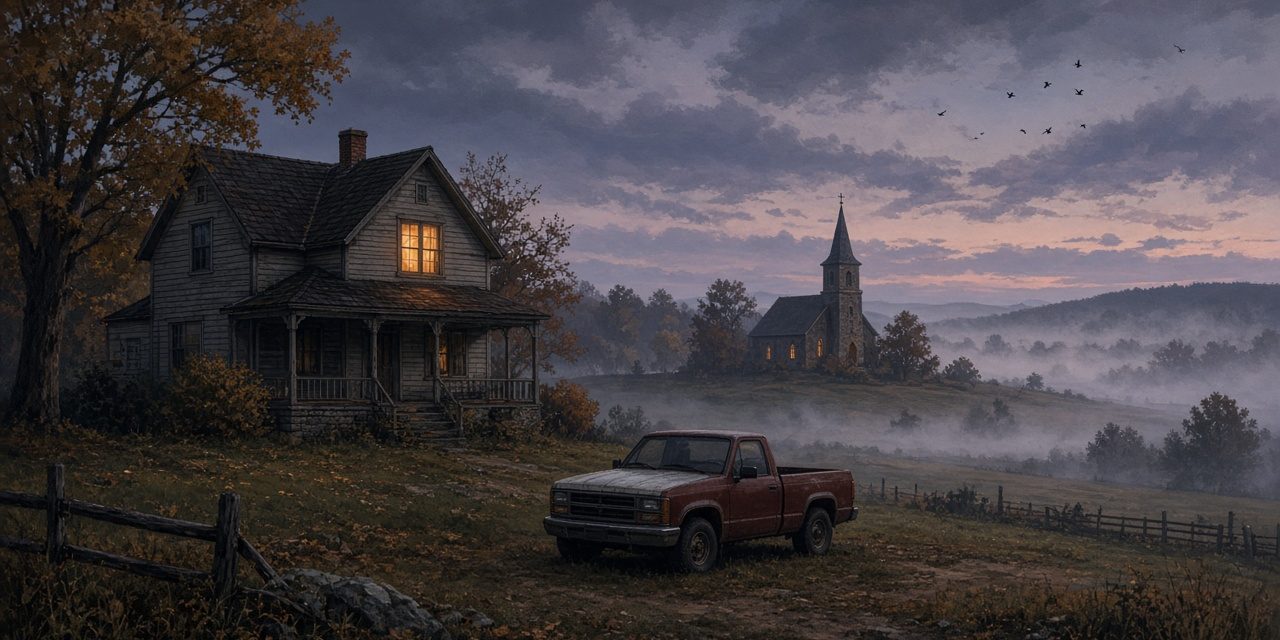
The crew rented a condemned farmhouse near Evans City, in Butler County about 30 miles north of Pittsburgh, for $300 a month, according to a TCM history. It had no basement, so the cellar scenes were shot in the Latent Image’s own building on Fort Pitt Boulevard, Russo said, and the crew furnished the set with a $50 truckload from Goodwill. The farmhouse was later bulldozed to make room for a sod farm. The cemetery scene that opens the film was, by TCM’s account, the last one shot, in November 1967, and the cast had to hold their breath so that the cold air would not show on camera.
Most of the cast came from the same circle: friends, family, actors from commercials, and Pittsburgh stage performers. Hardman’s real nine-year-old daughter, Kyra Schon, played the child. The lead, Ben, went to Duane Jones, who was from Duquesne but was teaching acting in New York. He was visiting his family at Easter 1967 when a mutual friend told him the group was about to start a film. Streiner said a friend of theirs had been slated to play the part, but once they saw Jones audition, “even Rudy was in favor of casting Duane.” Streiner and Romero have both said Jones got the part because he was the best actor.
The story, as Russo remembers it, came together in conversation. Romero had written 20 or 30 pages in which a young woman is chased through a cemetery by someone he had not yet identified. Russo suggested the pursuers be dead people, and that, in place of his own idea of flesh-eating aliens, they be after human flesh. That is one participant’s recollection, and the two writers’ memories may not match. What is documented is the script: Pitt’s archive holds Romero’s shooting script, which is covered in notes and changes.
The title, and the missing notice
The film had three names. It was developed as Night of the Anubis. During production it became Night of the Flesh Eaters. Streiner said that when he and Romero drove the finished print to New York in April 1968 to show it to distributors, they got a good response with one condition: the title had to change, because few people knew who Anubis was. The distributor, the Walter Reade Organization, then worried that Flesh Eaters was too close to a 1964 film called The Flesh Eaters and relabeled the picture Night of the Living Dead.
Here is the most repeated fact in the film’s history, and it is supported by the filmmakers, by the New York Times and by Pitt’s archive: in changing the title, the distributor removed the copyright notice and did not put one on the new title card. Under the law of the time, that meant the film entered the public domain almost at once. Anyone could show it, sell it or broadcast it without paying. The people who made it earned little from the copies that circulated.
Romero, in a 2016 interview with the Times, was of two minds. “The fact that people were able to show it for free, that anybody was able to distribute it, did result in lots of people seeing it, and keeping the film alive,” he said. But many of the prints were poor. In 2016 the Museum of Modern Art screened a new restoration that could be copyrighted, and the Criterion Channel’s 2018 release of that version, according to the Film Foundation, is the one edition that pays all of the original creators.
October 1968: the reviews
The film opened in Pittsburgh in October 1968 and, Russo said, played 17 drive-ins and neighborhood theaters in the area, with cars lined up on Route 51 waiting to get in. That is his recollection of the lines, but a trade paper noticed the numbers. Variety, in a review dated October 15, 1968, said the picture “apparently cleaned up in its first multiple break in Pittsburgh.” The review was otherwise scathing. It called the film “an unrelieved orgy of sadism,” questioned the “social responsibility of its Pittsburgh-based makers,” and dismissed the acting and lighting. The Times, according to its own 2016 retrospective, gave it a three-sentence review and described the filmmakers as “some people in Pittsburgh.”
The most famous contemporary account is not a review at all. Roger Ebert went to a Saturday matinee in Chicago, where the audience was mostly children. His column ran in the Chicago Sun-Times on January 5, 1969. The kids cheered when the lights went down and screamed with delight at the first ghoul. Then, he wrote, the mood changed. “The kids in the audience were stunned. There was almost complete silence.” A girl of about nine across the aisle sat very still and cried. “I felt real terror in that neighborhood theater last Saturday afternoon,” Ebert wrote, and he wrote that censorship was not the answer. He asked instead what parents were thinking when they “dumped the kids in front of the theater.” He noted that the film had been booked for the holiday season and that the Chicago police censor board had passed it for general audiences. In a 2004 note on the column, Ebert said he admired the film and would have given it three and a half stars. You can read the full 1969 column on his site.
A word about the ending, with a spoiler warning for the one reader who has not seen a 58-year-old film. Ebert’s column describes it: the lead, played by Jones, survives the night, only to be shot by the deputies who arrive to clear the area. Many viewers have read that in light of 1968, and the Pittsburgh Film Office, in 2017, said Romero is credited with working racism and other social ills into his films. That is interpretation. What the record shows is that the filmmakers say Jones was cast because he was the best actor who auditioned, and Romero maintained the same. Both things can be true, and the film leaves viewers to draw their own conclusions.
What remains
The Library of Congress added Night of the Living Dead to the National Film Registry in 1999. Romero died on July 16, 2017. His papers are now at the University of Pittsburgh, where the George A. Romero Archival Collection sits alongside a Horror Studies collection that also holds Bill Cardille’s archive, added in 2021, in time for Halloween. The Pittsburgh Film Office noted in 2017 that the Fulton Theater, where the film premiered, is now the Byham Theater.
In Evans City, the cemetery chapel seen in the opening scenes was nearly demolished. According to Image Ten, fans raised close to $50,000 to restore it, and Romero cut the ribbon at the 2014 Living Dead Festival. A 2018 City Paper article mentions a Night of the Living Dead museum in Evans City and an annual “Living Dead Weekend.” I have not checked whether either is still running, so check before you plan a trip.
Romero stayed in Western Pennsylvania for another famous picture. Dawn of the Dead was shot at the Monroeville Mall, and it opened in 1978. Our guide to movies filmed in Pittsburgh mentions it alongside other pictures made in the area.
For another figure from Western Pennsylvania’s Halloween lore, a real man whose story became legend, see the real story behind Charlie No-Face.
But the part worth remembering this morning is how modest it all was. A shop that made commercials bought a camera for a tourism job. A TV host plugged a friend’s monster movie every Saturday. Ten people put up about $600 each, by the filmmakers’ account, and a distributor left off a small line of type. The film that came out of it is in the Library of Congress’s National Film Registry, and it started with people in Pittsburgh who thought they could do better than the picture on TV.