
For a while, a motion sensor on a balcony door in the Carnegie Library of Homestead’s music hall kept going off two or three times a week, always between 3:15 and 3:18 in the morning. The library’s executive director, Carol Shrieve, told WTAE that nobody was in the building, nobody was hiding in the balcony and the windows were closed, but the door would swing open. “I am a skeptic,” she said, “but this is something that we couldn’t explain.” The library finally took the sensor off the door. Whether the haunted Carnegie Library of Homestead has ghosts is not something a historian can settle. The reason people usually give for why it would be haunted can be checked, though: the idea that Andrew Carnegie built it on bloodshed. Some of that story holds up and some of it does not.
A library, a music hall and a pool under one roof
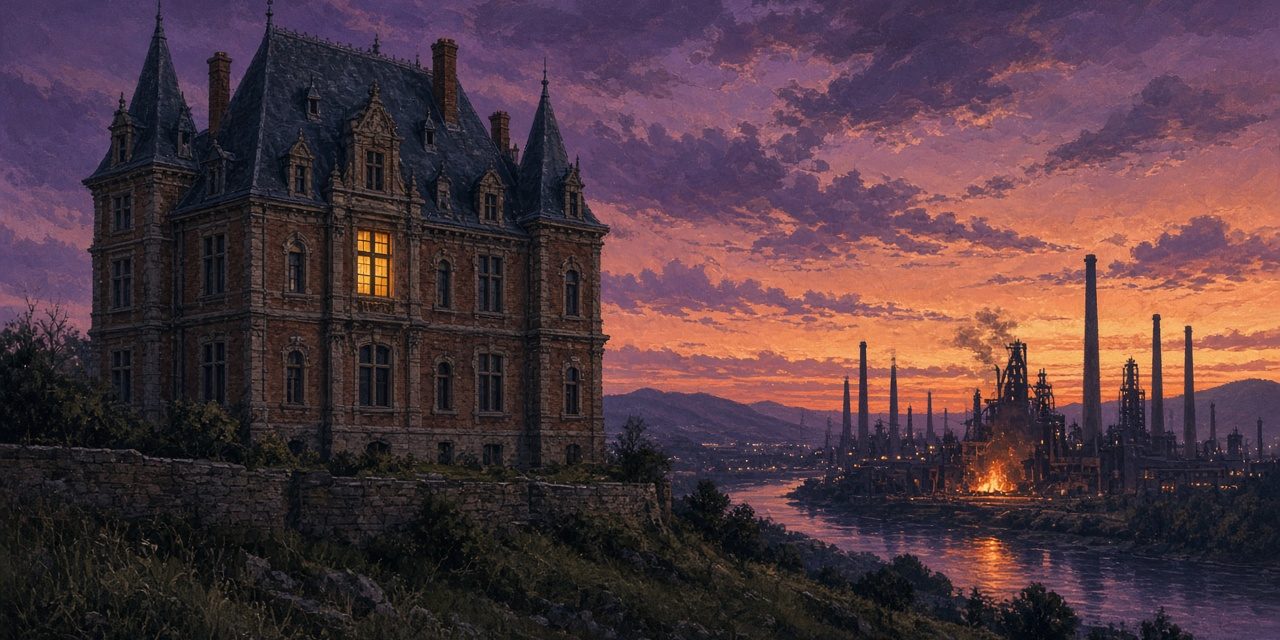
The building sits on a hill in Munhall, overlooking the site of the Homestead Steel Works. Pittsburgh architects Frank Alden and Alfred Harlow designed it in the French Renaissance style, William Miller & Sons built it, and the library’s own history page says ground was broken in April 1896. Under one roof it holds a public library, a music hall of around a thousand seats and an athletic club with a heated indoor pool. It was dedicated on November 5, 1898 (one local account says November 4), and it has operated continuously since. Carnegie called its three parts “three fountains from which healing waters are to flow” for the people’s “instruction, entertainment and happiness,” according to the library’s history page.
The legend, and where it appears in print
Legend: Books fly off shelves and rearrange themselves. Doors open and close on their own. Voices and shouts are heard with no one there. Shadow figures cross the music hall steps. Women giggle in the basement locker room. And the ghosts include steelworkers in sooty mill clothes, perhaps the spirit of Carnegie himself, and, in some retellings, victims of the 1892 Homestead strike.
That list comes from print and broadcast sources I could read, and it is worth knowing how recent they are. The earliest account I found is a November 2011 post on the blog Pennsylvania Haunts & History, which describes the shelf and door phenomena, the “ghosts of old steel hands, still dressed in their sooty mill outfits,” and the giggling in the locker room. That was written after the Syfy series Ghost Hunters filmed at the library in May 2011. The episode, “Ghost of Carnegie,” aired September 21, 2011. According to Syfy’s recap, the investigators could not debunk a door opening in the music hall, recorded a woman’s giggle in the locker room, and concluded there was “nothing threatening.” The recap also says “Carnegie supposedly built the library to win back the favor of all those he’d harmed,” and the episode listing on IMDb says the library “was built on bloodshed.”
After the episode, the library’s former board president, Dan Lloyd, wanted to screen it in the music hall and offer a tour afterward. According to the Tribune-Review, ghost tours have run at the library since 2012, and the first official ghost hunt took place the following year. In recent years the Oakmont Paranormal Society has run them as fundraisers, and the paper reported that more than $35,000 had been raised. I did not find an earlier printed ghost story about the library than 2011. That does not prove there wasn’t one, since local oral tradition does not always reach print, but the written trail begins with the television episode.
Trilby Busch, who has collected ghost stories since 1978 and writes the blog Valley of Steel, was skeptical in 2014 and 2015. She wrote that the library stories “have been told so often by so many people that it’s impossible to know the origins,” that she had never heard a first- or second-person account of a library ghost, and that “the good part of these stories is that they have boosted fundraising for the Homestead library.”
What the record shows about the ground
Fact: Carnegie promised Homestead a library in 1889, three years before the strike, according to a National Park Service study. The same study says initial plans were developed in 1892 before the battle, and that Carnegie, Phipps & Company had bought the hilltop land in 1890. The library was not a reaction to the violence. The study says that after the 1892 battle the Pennsylvania militia used that same land for an encampment. So the legend’s idea that the hill has a connection to the strike is real, though not in the way the ghost accounts describe, and none of the ghost accounts I read mention the militia. A 2002 draft National Park Service study of the Battle of Homestead and the Carrie Furnaces is the best public source for these points.
Fact: The battle itself was not on the library’s hill. On July 6, 1892, strikers fought Pinkerton agents who had arrived by barge at the mill’s riverfront landing. The Secret Pittsburgh guide from the University of Pittsburgh places the confrontation “less than a mile away at the Homestead Pump House.” Ten people died that day, seven workers and three Pinkertons, according to the National Park Service study. Rivers of Steel, the regional heritage organization, also says ten.
Disputed: Some ghost pages give a higher number. Wikipedia’s article on the library says the strike left 16 dead, and a Post-Gazette feature on the Carnegie halls says “sixteen people died in the clash.” A Library of Congress research guide to the strike also says it killed 16 people. The July 6 battle itself is generally given as ten dead, and sixteen may count people who died later of wounds or the wider strike, but I have not found a source that lists the sixteen. The IMDb summary of the Ghost Hunters episode also describes a fight between “steel mill workers and the townspeople,” which is not what happened. The fight was between workers and a private army.
Disputed: Was it a peace offering? The National Park Service study calls the library “the great philanthropist’s personal peace offering” and says it was dedicated “in an emotionally charged ceremony.” But Emily Kubincanek, the library’s program coordinator, who looks after its archive, told Rivers of Steel something more complicated: many families were wary of a building on a hill, away from the ward where most of them lived, and “the perspective of the strike didn’t just go away once the library opened.” The first superintendent, W. S. Bullock, and the librarian, Helen Sperry, are said to have left library-card applications in the stores on Eighth Avenue before the dedication, which, she believes, helped people get past Carnegie’s name.
Theory: Is the haunting steelworkers taking revenge? Busch argues no, because by 1898 “the unionists had scattered and the mill was filled with replacement workers.” That fits the broader history. The National Park Service study says the strike’s failure led to the loss of the union at Homestead and, in time, in the rest of the industry. It is an argument about who might be haunting, not evidence about whether anyone is.
One detail from the library’s own history page is worth passing on. The concert grand piano in the music hall was, it says, “anonymously given by Henry Clay Frick,” the Carnegie Steel chairman whose lockout led to the 1892 battle. The page mentions it without comment. Our post on the Homestead Strike and our profile of Frick cover the larger story, and our piece on Carnegie covers his philanthropy.

The one reported death in the pool
The legend does include one specific name. In its September 20, 2011 preview of the Ghost Hunters episode, the McKeesport Daily News reported that the old Homestead News Messenger had covered a “mysterious death in the pool” in November 1899. According to that report, Robert E. Peebles, 25, died on November 28 around 10 p.m. “under mysterious circumstances” and “was found dead in 8 feet of water.” A November 2011 ghost blog, Pennsylvania Haunts & History, also says a Robert Peebles was found dead in the pool in 1899 and credits the same newspaper, without the age or the hour.
Unverified, single-source: I could not find the 1899 newspaper itself, and neither could the fact-checker, so everything on Peebles comes through those two 2011 sources. A specific name, date and place make it more believable than most ghost-story deaths, but it is still one claim traced to one old newspaper that no one here has seen. It does not say what killed him. The library’s own archive or a digitized run of the Homestead papers may hold the original.
Legend: The cause has been filled in since. Writers have asked whether he was murdered, and some retellings add the sounds of splashing and cries for help from the pool area. On the other hand, in the WTAE report, Drake Bowan of the Oakmont Paranormal Society says that Peebles “went into cardiac failure and died within an arm’s reach of the ladder in the deep end.” I found no inquest, coroner’s report or other record for either version, though the library’s archive may hold one. The honest summary is that a 2011 report, quoting an 1899 newspaper I could not see, says a young man died in the library pool and that the circumstances were called mysterious, and the rest is guesswork.
What the building was for
Much better documented than any ghost is how the building was used. According to Rivers of Steel, the pool was open to the public from the start in a ward where most people had no bathroom of their own, and swimmers had to shower before entering. Swim coach Jack Scarry, who started in 1918, became known as “the Maker of Champions,” and Olympians Lenore Kight and Anna Mae Gorman trained there. Mill workers from Carnegie Steel were sent up the hill to repair everything from sinks to the pool boiler. Homestead had no public pool before the library, according to Rivers of Steel, and the only other pool nearby, at Kennywood, closed in 1973.
The archive also holds a less comfortable record. Rivers of Steel reports that the music hall was still segregated around 1915 and that the pool and athletic club stayed segregated longer, and that some Black residents interviewed for the library’s oral history project said they never felt welcome in the athletic club or gym. The library itself, Kubincanek said, “was always a place that welcomed everyone.”
When the mills closed, the music hall mostly went dark. U.S. Steel’s successor stopped its regular donations in 1988, and community volunteers, the borough and Carnegie’s endowment kept the building going. The hall came back in the early 2000s, and the first show of its revival, by Patti Smith, was on August 1, 2007.
The haunted Carnegie Library of Homestead, and the record
It is easy to roll your eyes at a haunted library, but the ghost tours have helped pay for a building that its original funders stopped supporting. The library’s own staff do not treat the stories as settled, and the director who could not explain the balcony door still calls herself a skeptic. What the record gives you is a cleaner story than the legend: a library promised before a strike, built on ground where troops later camped, finished six years after a battle that happened below the hill, and kept alive by the people who used it.
If you want to see it, the Carnegie Library of Homestead is at 510 East Tenth Avenue in Munhall. Ghost tours have been held around Halloween, so check the library’s schedule. Ask the staff about the balcony door.