
Sometime around 1782 — possibly earlier — a trader named Daniel Elliott built a sandstone tavern along the road connecting Washington and Pittsburgh, and travelers heading into the frontier started stopping there for a drink, a meal, and a place to sleep.
That building is still standing.
It sits at 434 Greentree Road, two stories of thick sandstone walls and narrow windows that have outlasted almost everything built around them. It has been an inn, a trading post, a stagecoach stop, a speakeasy, and a neighborhood bar. It survived the Whiskey Rebellion, Prohibition, and two and a half centuries of Pittsburgh history.
It’s called the Old Stone Tavern, and it is widely regarded as the oldest commercial building in Pittsburgh.
It is also currently closed, which is its own kind of story.
Who Built It and When
The exact date is a point of some debate.
A datestone at the site is carved 1754, but historians generally agree that the actual construction happened in the early 1780s, with around 1782 being the most commonly cited date. Some sources push it back to 1777. Either way, Daniel Elliott built the structure near the Washington–Pittsburgh Turnpike to serve the steady traffic of farmers, settlers, and travelers moving through the region.
Elliott was a trader operating in a landscape that was genuinely frontier territory. Pittsburgh in the early 1780s was a small, rough settlement at the edge of organized American life. The road west from Washington was a lifeline, and a tavern positioned along it wasn’t just a business — it was infrastructure. To understand just how early in Pittsburgh’s story this building appears, the timeline from Fort Duquesne to modern Pittsburgh puts it in full context.
The tavern provided lodging, supplies, and a social gathering point for everyone passing through. For decades that was enough of a purpose to keep it running.
The Whiskey Rebellion Connection
Here’s the detail that makes the Old Stone Tavern more than just a very old building.
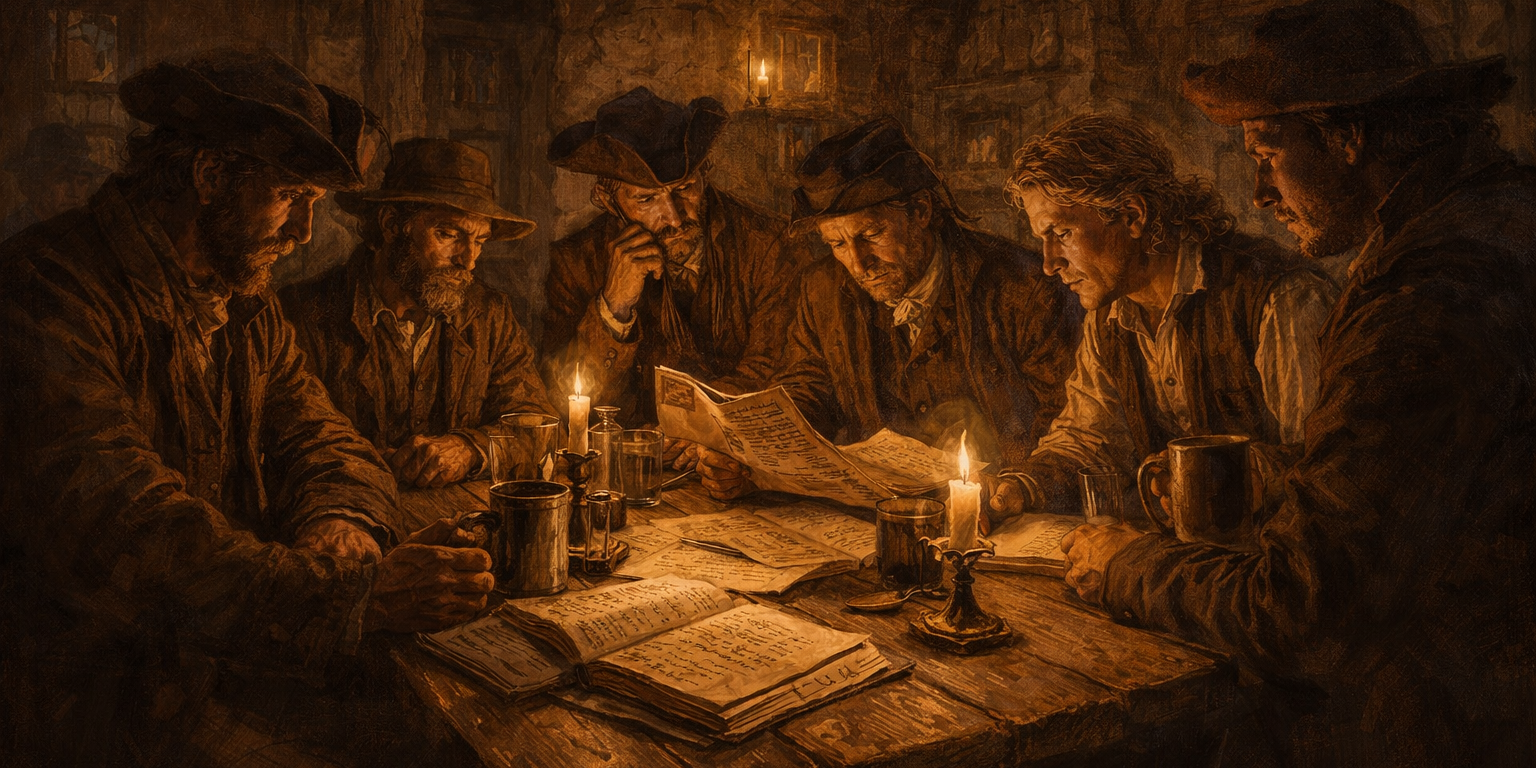
During the 1790s, western Pennsylvania became the center of the Whiskey Rebellion — a tax revolt by farmers and distillers who refused to pay the federal excise tax on whiskey that Alexander Hamilton had pushed through Congress. It was the first major test of the new federal government’s authority, and it played out largely in the hills and roads surrounding Pittsburgh.
The Old Stone Tavern was in the middle of it.
A ledger discovered on the property lists payments from rebels, providing tangible, physical evidence of the tavern’s role as a gathering point for people who were actively resisting the federal government. That ledger is not a legend or a local myth. It’s a document, found in the building, connecting the structure directly to one of the most significant episodes in early American history.
Most old buildings can tell you they’ve seen a lot. The Old Stone Tavern can show you a receipt.
What It Looked Like to Keep Operating for 225 Years
The building that Elliott constructed was practical and durable. Two stories of sandstone, thick walls, narrow windows, hand-hewn beams inside, fireplaces built for actual use rather than atmosphere. It was designed for the demands of an eighteenth-century inn, which meant it needed to be solid enough to last through hard winters and hard use.
It was. For a very long time.
The tavern served as a stagecoach stop through the nineteenth century, adapting as the road it sat on changed in importance. It kept operating as a bar and social gathering place well into the twentieth century, which is itself remarkable for a building that predates the Constitution.
When Prohibition arrived in 1920, the Old Stone Tavern ran the same play a lot of Pittsburgh establishments ran — and Pittsburgh’s role in Prohibition makes clear the city was never particularly interested in going dry. The tavern legally sold candy and ice cream upstairs while operating a speakeasy in the basement. A building that had hosted Whiskey Rebellion sympathizers in the 1790s wasn’t going to let federal alcohol policy slow it down in the 1920s either.
After repeal, the bar license came back and the tavern kept going. It is part of a remarkable group of Pittsburgh drinking establishments with genuine deep roots — Pittsburgh’s oldest bars and the history behind them covers the full landscape, but the Old Stone Tavern sits at the top of that list by a significant margin.
The Closure
After roughly 225 years of continuous operation, the Old Stone Tavern closed in 2008.
That sentence is hard to absorb. A building that made it through the Whiskey Rebellion, the Civil War, two World Wars, Prohibition, and the collapse of Pittsburgh’s steel economy closed in 2008.
When closure came, so did the threat of demolition. Preservationists pushed back, arguing — correctly — that very few frontier-era commercial buildings survive anywhere in Pittsburgh, and that losing this one would be permanent. The historic designation that the building carries has kept demolition off the table, but it hasn’t solved the funding problem that has kept restoration stalled.
As of now, the Old Stone Tavern sits waiting. The exterior is visible from the sidewalk. The interior is not accessible to the public. There are no tours, no scheduled reopening, no firm timeline.
Why It Still Matters
The Old Stone Tavern is not a romantic ruin. It’s a building with a specific, documented history that connects Pittsburgh to the earliest years of American national life — the frontier period, the Whiskey Rebellion, the stagecoach era, Prohibition — in a way that almost nothing else in the region can.
The fact that it’s closed doesn’t make it less significant. It makes the case for preservation more urgent.
A Whiskey Rebellion ledger was found inside those walls. That doesn’t happen twice.
Visitor Information
Address: 434 Greentree Road, Pittsburgh, PA 15220
Current status: Closed to the public
What you can do: View the exterior from the sidewalk — the sandstone facade and general form of the building are visible from the street
For updates on restoration: Contact local historical societies or check Pittsburgh preservation organization websites for the latest on reopening plans
The Old Stone Tavern at 434 Greentree Road is believed to have been built around 1782 by Daniel Elliott and is considered Pittsburgh’s oldest commercial building. It closed in 2008 and restoration efforts are ongoing.