
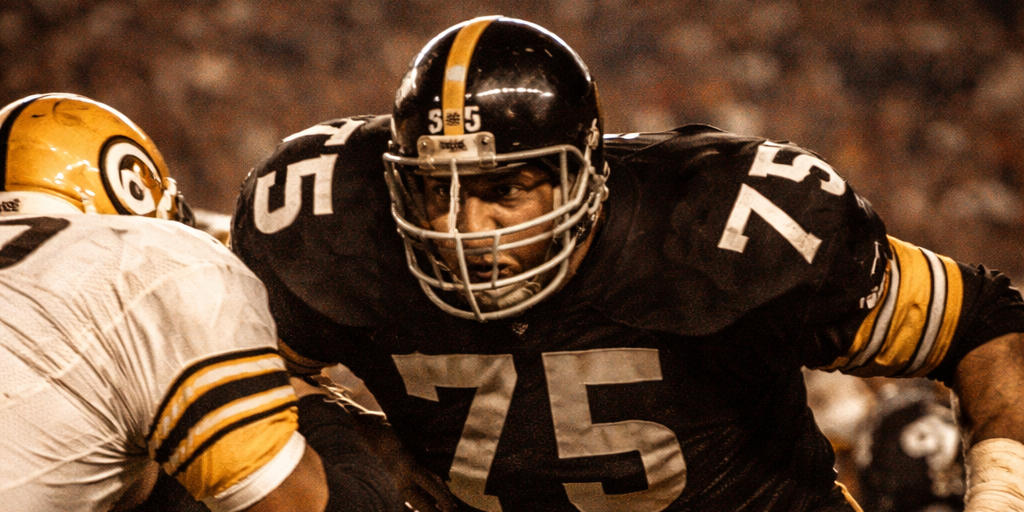
The Pittsburgh Steelers 1970s dynasty is the standard against which every other run of sustained excellence in professional football is measured. Four Super Bowl championships in six seasons. A defense so suffocating it earned a nickname that referenced both the city’s industrial identity and the most foreboding geopolitical barrier of the Cold War era. A roster assembled almost entirely through the draft that produced nine Hall of Fame players. And a head coach who arrived in 1969 to a franchise that had never won anything and proceeded to build the greatest team the National Football League had seen up to that point, and arguably since. This is the story of how Pittsburgh built that team, what made it historically great, and why it still matters fifty years later.
The Man Who Started Everything
You cannot tell the story of the Steelers dynasty without starting with Chuck Noll, because without Chuck Noll there is no dynasty. When Art Rooney Sr., the beloved founder of the franchise, hired Noll as head coach in January 1969, the Steelers had been in existence for thirty-six years without a single playoff victory. They were, by any reasonable measure, one of the worst-run franchises in professional sports. Noll was thirty-seven years old and had never been a head coach at any level.
Art Rooney had built the Steelers from nothing in 1933, sustained them through decades of losing with a combination of personal charm, civic loyalty, and stubborn refusal to move the franchise to a more profitable market. He deserved better than what the team had given him, and he knew it. Noll was his bet on a different future.
Noll’s philosophy was simple and unromantic: build through the draft, develop players properly, eliminate the organizational chaos that had defined the franchise, and be patient. He went 1 and 13 in his first season. He went 5 and 9 in his second. Anyone watching from the outside saw a team still losing. Anyone watching from the inside saw a team beginning to acquire the pieces of something extraordinary.
The Draft Classes That Changed Everything
The transformation of the Pittsburgh Steelers from perennial loser to dynasty was accomplished primarily through a series of NFL drafts between 1969 and 1974 that have no equal in the history of the league. The architect of those drafts was not only Noll but also Bill Nunn, a former journalist at the Pittsburgh Courier who joined the Steelers scouting department and opened up a pipeline to historically Black colleges and universities that other franchises were largely ignoring. Nunn’s contribution to the dynasty is one of the most underappreciated stories in Pittsburgh sports history, and the players he identified changed the franchise forever.
The 1969 draft brought “Mean Joe” Greene, a defensive tackle from North Texas State who would become the anchor of the Steel Curtain and arguably the most dominant defensive player of his generation. The 1970 draft brought Terry Bradshaw, a quarterback from Louisiana Tech selected first overall, who would take years to develop but ultimately deliver two Super Bowl MVP performances. The 1971 draft brought Jack Ham, a linebacker from Penn State who would become one of the finest players at his position in the sport’s history. The 1972 draft brought Franco Harris, a running back from Penn State who would win a Super Bowl MVP in his second season.
And then came 1974, a draft class so extraordinary that it stands alone in the conversation about the greatest single collection of talent ever assembled in one year. In four picks, the Steelers selected Lynn Swann in the first round, Jack Lambert in the second round, John Stallworth in the fourth round, and Mike Webster in the fifth round. All four are in the Pro Football Hall of Fame. No other team has ever produced four Hall of Famers from a single draft class.
The Immaculate Reception
Before any of those 1974 draftees played a single professional game, the Steelers announced their arrival on the national stage with one of the most famous plays in the history of American sport. On December 23, 1972, in an AFC Divisional Playoff game against the Oakland Raiders, Pittsburgh trailed 7 to 6 with twenty-two seconds remaining. Terry Bradshaw threw a pass intended for running back Frenchy Fuqua. The ball deflected, under circumstances that remain disputed a half-century later, and Franco Harris, running his route, caught it just inches from the ground and ran it into the end zone. Touchdown. Pittsburgh 13, Oakland 7.
The call from radio broadcaster Myron Cope, who screamed “Immaculate Reception!” into his microphone, gave the play a name that has stuck permanently. It was the Steelers’ first playoff victory in franchise history, a fact that underscores how complete the transformation Noll was engineering actually was. The team that had never won in the postseason was suddenly making the most memorable play the postseason had ever produced.
The Steel Curtain
By the 1973 and 1974 seasons, the Pittsburgh defense had evolved into something that opposing offenses genuinely feared. The front four of Mean Joe Greene, L.C. Greenwood, Ernie Holmes, and Dwight White became known as the Steel Curtain, a name that merged the city’s industrial identity with the impenetrability of what they put on the field. The reference to the Iron Curtain, the Cold War term for the barrier between Soviet and Western Europe, was deliberate and appropriate. Getting through this defense felt about as likely as crossing that border.
Greene was the centerpiece, a physically overpowering presence who disrupted offensive lines in ways that the statistics of the era did not fully capture. He was mean in the specific sense that his opponents found him legitimately frightening, and he was brilliant in the sense that his understanding of leverage, angles, and timing made him nearly impossible to block one-on-one or sometimes even two-on-one.
Behind the line, Jack Lambert patrolled the middle with an aggression that set the tone for how the entire defense operated. Lambert was six feet four and played at around two hundred twenty pounds, which was considered light for a middle linebacker even then. He compensated with ferocity and football intelligence that made him the emotional engine of the unit. Jack Ham, working the outside, provided a different kind of excellence: instinctive, anticipatory, always in the right place. Ham is considered by many historians of the game to be the finest outside linebacker who ever played.
In the secondary, Mel Blount operated at cornerback with a physical dominance over receivers that eventually forced the NFL to change its rules. The “Mel Blount Rule,” instituted in 1978, limited the contact defensive backs could make with receivers beyond five yards from the line of scrimmage. The league had to rewrite its regulations because one Pittsburgh cornerback was too good at what he did. That is the kind of impact the Steel Curtain had on the sport.
Super Bowl IX: The First One
On January 12, 1975, in New Orleans, the Pittsburgh Steelers played the Minnesota Vikings in Super Bowl IX and won 16 to 0. Franco Harris rushed for 158 yards and was named the game’s Most Valuable Player. The Steel Curtain held the Vikings, one of the most powerful offenses in the league, to seventeen total yards rushing. Seventeen yards. In a Super Bowl.
For Art Rooney Sr., who had owned the franchise for forty-one years without a championship, the moment was everything. The sight of the Chief, as everyone called him, receiving the Lombardi Trophy after four decades of waiting became one of the enduring images of that era of Pittsburgh sports. He had never wavered in his commitment to the city or the franchise. The franchise had finally earned the commitment back.
Super Bowl X: The Lynn Swann Game
The 1975 Pittsburgh Steelers returned to the Super Bowl and faced the Dallas Cowboys, a franchise that was simultaneously building its own dynasty and had taken to calling itself America’s Team. Super Bowl X, played in Miami on January 18, 1976, produced one of the most aesthetically memorable performances in championship game history.
Lynn Swann, the wide receiver from the 1974 draft class, caught four passes for 161 yards including a 64-yard touchdown reception that required a degree of athleticism and body control that stopped the game. Swann had suffered a concussion in the AFC Championship game two weeks earlier and his participation in the Super Bowl had been genuinely in doubt. He played anyway and was named the game’s MVP. Pittsburgh won 21 to 17.
Terry Bradshaw, who threw the touchdown pass to Swann while being hit and was knocked unconscious on the play, did not know the final score until he woke up in the locker room. That detail has become part of the mythology of that team: a quarterback so committed to making the throw that he completed it through a hit that rendered him temporarily unconscious.
The Gap Years and the Return
The Steelers did not return to the Super Bowl in 1976 or 1977, though both teams were competitive and the 1976 squad in particular was arguably one of the best in the league before injuries derailed the postseason run. The gap gave the impression, briefly, that the dynasty might be over. It was not.
Super Bowl XIII: The Duel of Dynasties
Super Bowl XIII, played in Miami on January 21, 1979, matched Pittsburgh against Dallas for the second time in four years and produced what many consider the finest Super Bowl ever played up to that point. The game was close throughout, contested between two franchises at the absolute peak of their powers, and finished 35 to 31 in Pittsburgh’s favor.
Terry Bradshaw threw for 318 yards and four touchdowns and was named the game’s MVP. John Stallworth, the quiet wide receiver from the 1974 draft class who had spent much of his career in Lynn Swann’s shadow, caught a 75-yard touchdown pass in the third quarter that effectively decided the game. The moment announced to the football world that Pittsburgh had two elite receivers, not one, a depth that opposing defenses had no answer for.
The Cowboys had several plays go against them that they argued were incorrect officiating decisions, and the controversy over those calls has never fully settled. What is not disputed is the final score, and what it meant: Pittsburgh was the first franchise in NFL history to win three Super Bowls.
Super Bowl XIV: The Fourth
One year later, on January 20, 1980, in Pasadena, California, the Pittsburgh Steelers beat the Los Angeles Rams 31 to 19 in Super Bowl XIV to become the first franchise to win four Super Bowl championships. Bradshaw was named MVP for the second consecutive year, throwing for 309 yards and two touchdowns. John Stallworth again delivered the signature play, a 73-yard touchdown catch in the fourth quarter that broke a 19 to 17 Rams lead and put the game away.
The four championships in six years placed the Steelers in a category of sustained excellence that had no precedent in the Super Bowl era and has not been matched since. The New England Patriots under Bill Belichick and Tom Brady would eventually win more total championships, but no team has matched the concentration of four titles in a six-year window.
What Pittsburgh Meant to the Dynasty
The 1970s Steelers existed in a specific Pittsburgh context that shaped who they were and why the city attached to them so fiercely. The steel industry that had defined Pittsburgh for a century was in steep decline throughout the decade, mills closing, workers being laid off, the economic foundation of the region quietly crumbling. The Steelers, named for the industry that was disappearing, were winning at the exact moment the city needed something to win. That timing was not coincidental in its emotional impact even if it was coincidental in its scheduling.
The Terrible Towel, a simple gold towel introduced by broadcaster Myron Cope in 1975 as a rally symbol, became one of the most recognizable fan artifacts in American sports precisely because it channeled something real: the pride of a city that was struggling economically but refused to define itself by that struggle. Waving a Terrible Towel at Three Rivers Stadium in 1975 or 1979 was an act of civic identity as much as sports fandom.
Rocky Bleier, the running back who had been drafted by the Steelers in 1968, shipped to Vietnam, wounded by grenade fire, and told he would never play professional football again, came back to win four Super Bowls as a starter in Pittsburgh’s backfield. His story was not incidental to the team’s identity. It was central to it. These were players and a city who understood what it meant to be counted out and keep going anyway.
The Legacy
The nine Hall of Famers produced by that era of Steelers football represent a concentration of talent at one franchise that the sport has never seen replicated. Chuck Noll, who died in 2014, won more Super Bowls as a head coach than anyone in history until Bill Belichick passed him decades later. Mean Joe Greene became the subject of one of the most beloved television commercials ever made, a Coca-Cola ad in which he exchanges his jersey for a bottle of Coke with a young fan that captured something genuine about how Pittsburgh felt about its team. Jack Lambert’s toothless snarl became the visual shorthand for Pittsburgh football. Franco Harris’s outstretched hands, catching that deflected ball against the Raiders, remain among the most reproduced images in the sport’s history.
The Steel Curtain did not just win games. It gave Pittsburgh an identity at a moment when the city’s industrial identity was fracturing, and it set a standard for excellence that the franchise and the city have measured themselves against ever since.