
When the NFL rolls into Pittsburgh for the 2026 Draft on April 23rd, the city is going to look like a football carnival. The North Shore packed. Point State Park lit up. Acrisure Stadium as the backdrop for a broadcast seen by millions.
It will feel enormous. It will feel new.
It won’t be new.
Pittsburgh hosted the NFL Draft before — and the last time it happened, the whole thing took place inside a hotel room with a handful of men, paper lists, and no cameras in sight.
That was December 19, 1947. The event was called the 1948 NFL Draft. The location was the Fort Pitt Hotel, right in the Golden Triangle.
And almost nobody talks about it.
First, Let’s Clear Up the Date Thing
Yes, the 1948 draft happened in 1947. That’s not a typo.
In that era, the NFL’s draft calendar didn’t follow the rhythm modern fans are used to. The league held its draft at a different point relative to the season, which is why you’ll see December 19, 1947 listed as the date for a draft named after 1948.
The clean way to say it: the 1948 NFL Draft took place in Pittsburgh on December 19, 1947.
That one sentence will make you sound like you actually know what you’re talking about, which, after reading this, you will.
What the Draft Actually Looked Like
Here is what the 1948 draft was not.
It was not a stage the size of a small building. It was not a crowd of hundreds of thousands. It was not analysts building careers by screaming about who got a steal in the third round.
It was a meeting.
NFL team representatives gathered in a Pittsburgh hotel — a good one, a downtown one, the kind of place that hosted serious business in a city that took business seriously — and they worked through names on paper lists. Thirty-two rounds of them. Three hundred total selections.
Read that again. Thirty-two rounds. Today’s draft runs seven rounds and fans treat it like a marathon. In 1947, they were just getting warmed up at round seven.
The reason for the depth wasn’t indulgence. It was uncertainty. Scouting wasn’t a data-driven operation. There was no film room in the modern sense, no analytics department, no combine metrics to debate. There were relationships, word of mouth, coaches who trusted their eyes, and executives making expensive guesses about young men who might or might not choose professional football over everything else competing for their attention — including, in some cases, military obligations or simply other careers.
A long draft reflected a league still figuring out what it was.
The First Pick Wasn’t What You’d Expect
Here’s the detail that surprises modern fans most.
The first overall selection in the 1948 draft was not automatically awarded to the worst team in the league, the way people assume the draft has always worked. It was a bonus pick determined by lottery, and Washington won it.
With that pick, Washington selected halfback Harry Gilmer.
That single fact opens a window onto something bigger. The NFL in 1947 was still actively experimenting with how to structure competition and keep fans invested across the league. The methods looked different than they do now, but the underlying puzzle was identical to the one the league is still solving today.
How do you keep everyone relevant? How do you keep the whole thing interesting?
The answers evolve. The question doesn’t.
The Fort Pitt Hotel
If you want to understand where this happened, you need to picture the Fort Pitt Hotel.
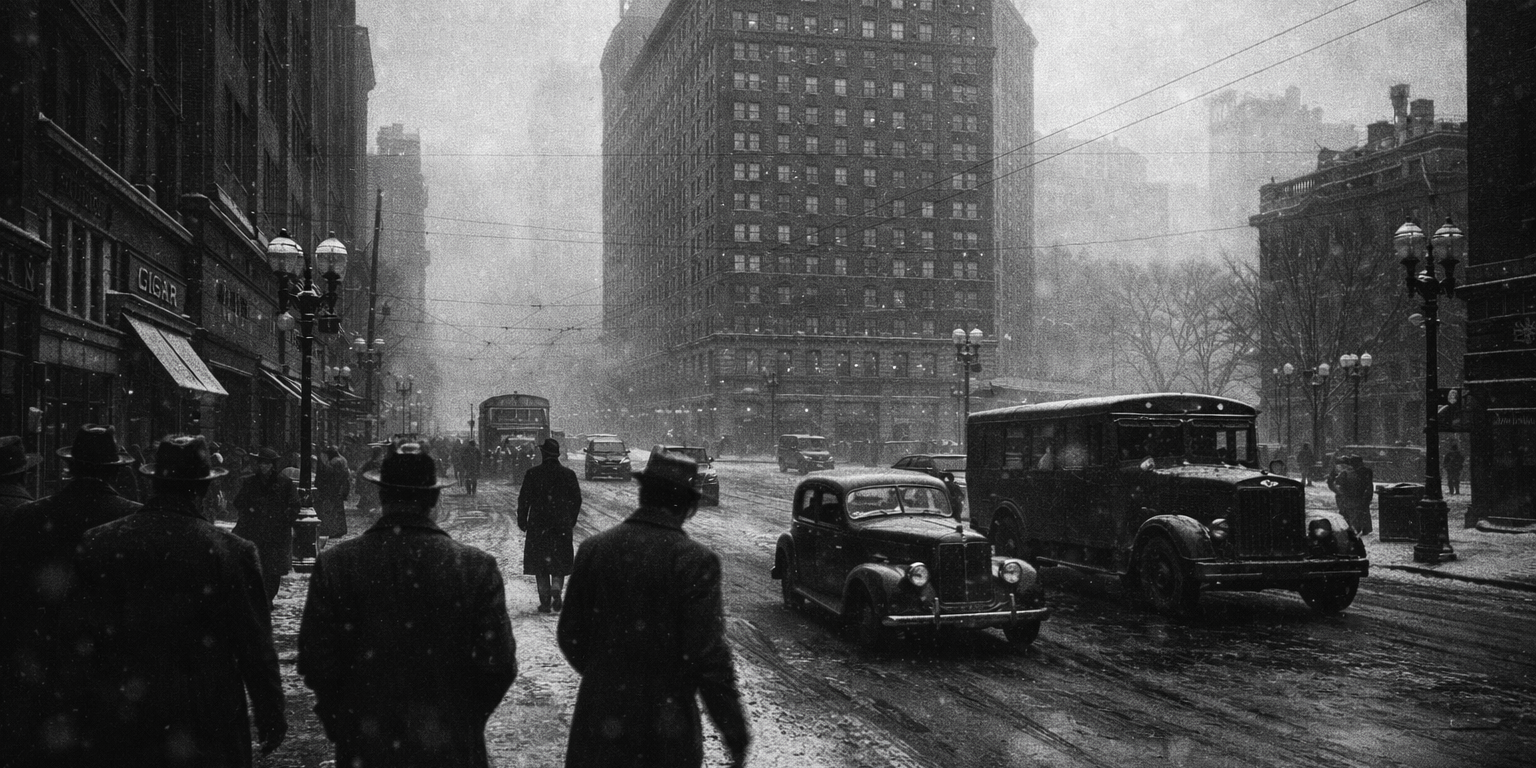
It stood at Penn Avenue and Tenth Street on the eastern edge of the Golden Triangle, and in its era it was one of the city’s most prominent downtown hotels — the kind of place that hosted important travelers, civic gatherings, and business meetings that shaped the region. It was built in sections, with an early twentieth-century core and a later tower addition, and it was a genuine piece of downtown Pittsburgh’s identity.
It’s gone now. The building was razed in 1967 during redevelopment.
So if you walk to Penn Avenue and Tenth Street today, you won’t find a lobby or a bar or a placard marking the spot. You’ll find what replaced it.
But here’s the thing about history in a city like Pittsburgh. The absence of a building doesn’t erase what happened there. It just means you have to know the story before you arrive.
A Practical Move for Draft Week 2026
If you’re coming to Pittsburgh in April 2026 for the draft, here’s a suggestion worth taking.
The main action will be split between two areas. The draft stage and theater are planned for the North Shore outside Acrisure Stadium, with fan programming and experience elements stretching down to Point State Park on the downtown side of the bridges.
That puts you in the Golden Triangle anyway.
So while you’re there, walk a few blocks east from the Point. Find Penn Avenue and Tenth Street. Look at what’s standing there now.
Then say this out loud, or just think it:
In December 1947, inside a hotel that used to stand right here, the NFL held its draft in Pittsburgh.
That’s it. No plaque required. No tour guide needed. Just the knowledge that the ground you’re standing on has been part of this league’s story for a long time — back when the draft was a private meeting and the whole operation fit in a single room.
Why Pittsburgh in the First Place?
It’s worth asking why the league brought the draft to Pittsburgh in 1947.
Art Rooney and the founding of the Pittsburgh Steelers dates back to 1933, meaning that by 1947 the franchise was already fourteen years into building something — and the city had grown into a genuine football town around it. Pittsburgh’s relationship with the sport was real and local and felt in the bars and neighborhoods and conversations around the city. It was a compact, connected, serious place — the kind of city where you could hold an important meeting and feel the weight of it.
The Fort Pitt Hotel fit that mood. It wasn’t a flashy choice. It was a functional, respected, Pittsburgh choice.
And in a way, that feels right for a draft that was itself functional and unflashy. No ceremony. No broadcast. Just decisions being made by people who understood that getting this right mattered.
What This Means in 2026
A lot of cities can host a big event. Event hosting is a logistics problem, and big cities with good convention infrastructure solve logistics problems all the time.
Fewer cities can say they were part of the NFL’s story when the league was still becoming itself.
Pittsburgh can say that. The roster of greatest Steelers players who would eventually define the franchise hadn’t been drafted yet in 1947 — but the machinery that would eventually produce them was already running.
When the commissioner walks to the microphone on the North Shore this April, and the crowd roars, and the broadcast cuts to highlight packages and reaction shots and all the modern machinery of draft week — somewhere in the background of that moment is a quieter one.
A hotel room. December 1947. Paper lists and cigarette smoke and the sound of names being called out and written down.
The 2026 NFL Draft in Pittsburgh isn’t a first.
It’s a return.
The 1948 NFL Draft took place on December 19, 1947, at the Fort Pitt Hotel, Penn Avenue and Tenth Street, Pittsburgh. The building was razed in 1967. The 2026 NFL Draft is scheduled for April 23–25, with the main stage outside Acrisure Stadium on the North Shore and fan programming at Point State Park.